
Interview with sesame by Dawn by sesamenom, Dawn Felagund
Posted on ; updated on
This article is part of the newsletter column Mereth Aderthad.
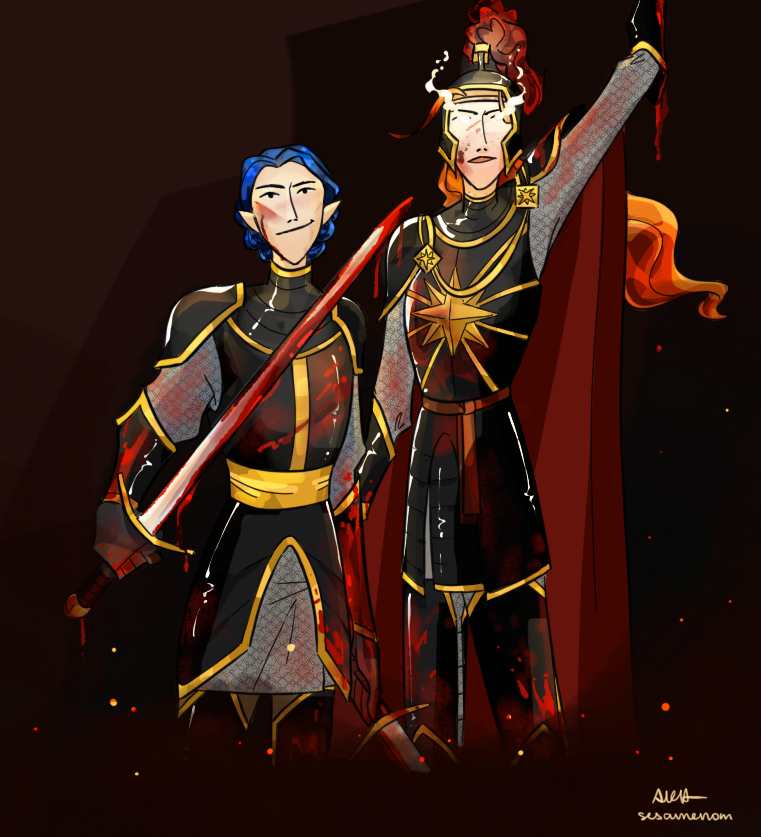
Sesame is the featured artist for Jaz's Mereth Aderthad 2025 presentation "Twilight, Child Of: Comparisons Between Tinúviel, Lómion, and Undómiel" and has created two separate fanworks, one for the event's fanzine and one that will be featured at the event itself. Dawn spoke with sesame about the journey from reading The Hobbit as a child to taking notes on The History of Middle-earth, the appeal of the Fall of Gondolin, and how they create their distinctive artwork.
Dawn: Where can we find your fanworks?
sesame: My art is on Tumblr at @sesamenom (though I do occasionally dabble in writing as well, and I have one chapter of my Dagor Dagorath fic on Ao3 under the same name!)
Dawn: What draws you to Tolkien and what is your favorite part of the legendarium?
sesame: I originally read The Hobbit when I was nine years old, because, of the books available in the classroom library, it was the easiest to keep at my desk. I read The Lord of the Rings the next year, and when I was eleven, I started The Silmarillion at the recommendation of an older Tolkien fan at a LEGO convention! I've always particularly enjoyed the immersion that comes with the depth of Tolkien's worldbuilding, and while eleven-year-old me wasn't always sure what was happening plot-wise, the lore was incredibly captivating. I reread the Silm two years later, this time armed with a notebook to keep track of the names and events, and it quickly became my favorite book. I continued my Tolkien journey with The History of Middle-earth, where one of my favorite parts of the process was reading through the different versions and footnotes, and getting to see how the stories and characters shifted throughout each draft.
Of the legendarium, my favorite individual story is the Fall of Gondolin, particularly the Lost Tales version. It perfectly blends the epic fantasy and heroic battles with the deeper nuances of the lore, and I feel like I realize something new about the implications of the rise and fall of Gondolin every time I read it! I also really enjoy the narrative of the Doom for similar reasons, and the Noldorin chapters of the Silm are my go-to for when I return to Beleriand.
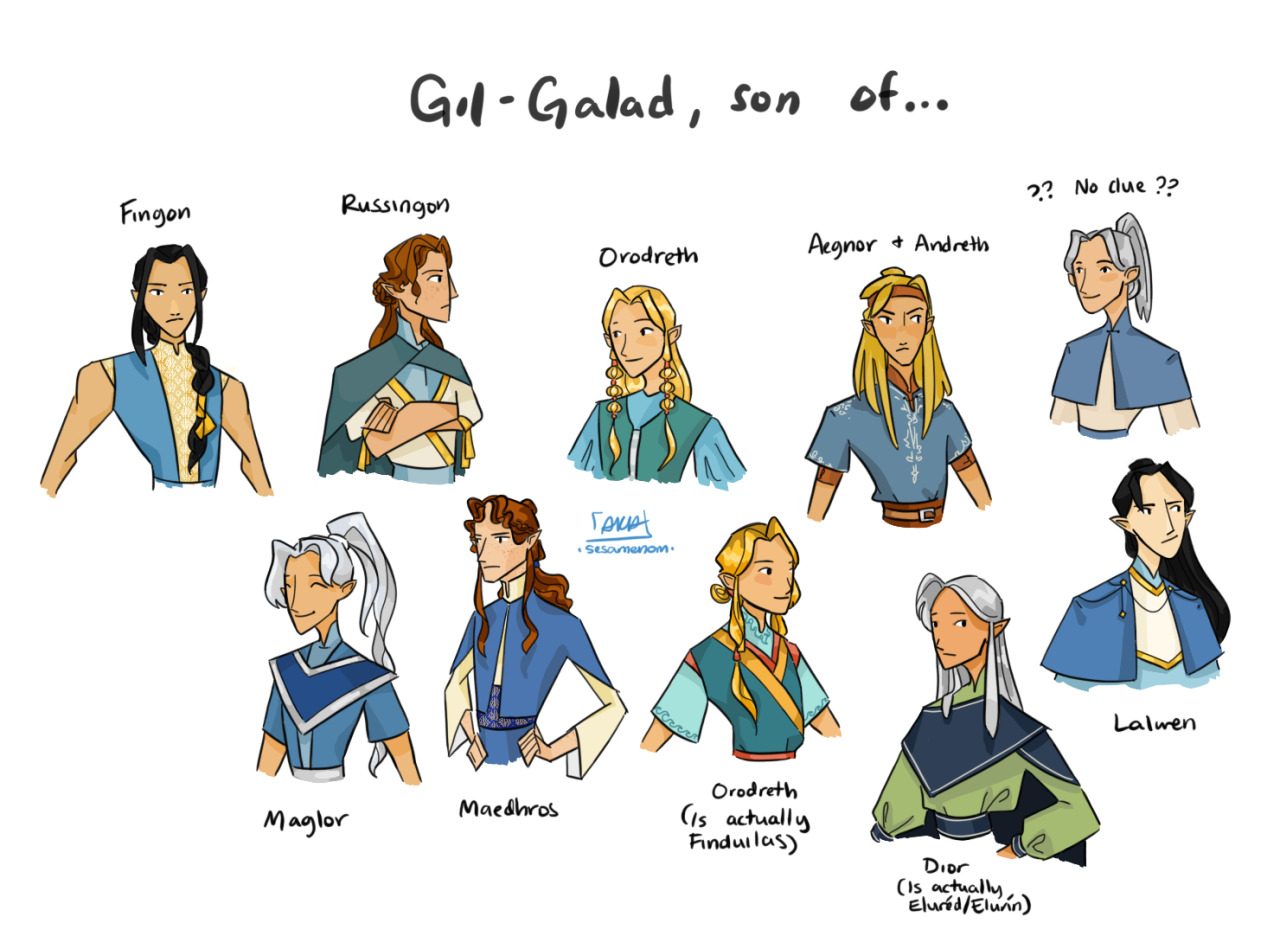
Dawn: One of the things I love about your work is the way that you draw on meta about Tolkien, fandom in-jokes, and popular culture to create artwork that comments on all of the above. Where do you get your inspiration for your ideas?
sesame: Thank you! Art inspiration has always been the sort of thing that pops into my head at 1 AM. I keep a few pages on my laptop sticky notes and my phone's notes app for jotting down random ideas, and I guess the combination of meta, fandom, and pop culture is the result of whatever I've recently been scrolling through surfacing in my mental wanderings! On the other hand, this does create the occasional issue of bullet-pointing a cool idea and then forgetting about it for long enough that I have no clue what the context for it is, haha. Generally though, I'd say the bulk of my inspiration comes from interacting with the fandom—cool meta posts I read, conversations with mutuals, and somebody's tag essay in the notes are all present in the thought process behind drawing a piece.
Dawn: Why did you choose Jaz's presentation to create artwork for?
sesame: The topic initially stood out to me—I've always loved how the Fall of Gondolin approaches the Doom through the contrast of Idril and Maeglin's stories, and the parallels between Arwen and Lúthien (and their respective humans) tend to be a recurring line of thought when I'm in a Line-of-Lúthien-y mood. While I'd previously noticed the "twilight children" name similarities, I'd never considered the intersection of all three of the titular twilight children, particularly Maeglin, and reading Jaz's abstract sparked so many new ideas that I immediately knew I had to draw something about it! The plot parallels and the reference to Maeglin's narrative treatment were uniquely compelling in the way they create an entirely new dimension of the twilight children comparisons, and I'm super excited to have had this opportunity!
Dawn: Okay, I'm mostly a non-artist myself, so whenever I get to interview artists, I want to know how you do it! What I love about your work is how you use the crisp, clean comic style, but this is often paired with backgrounds that are glowing and ethereal. So can you tell this non-artist something about your technique?
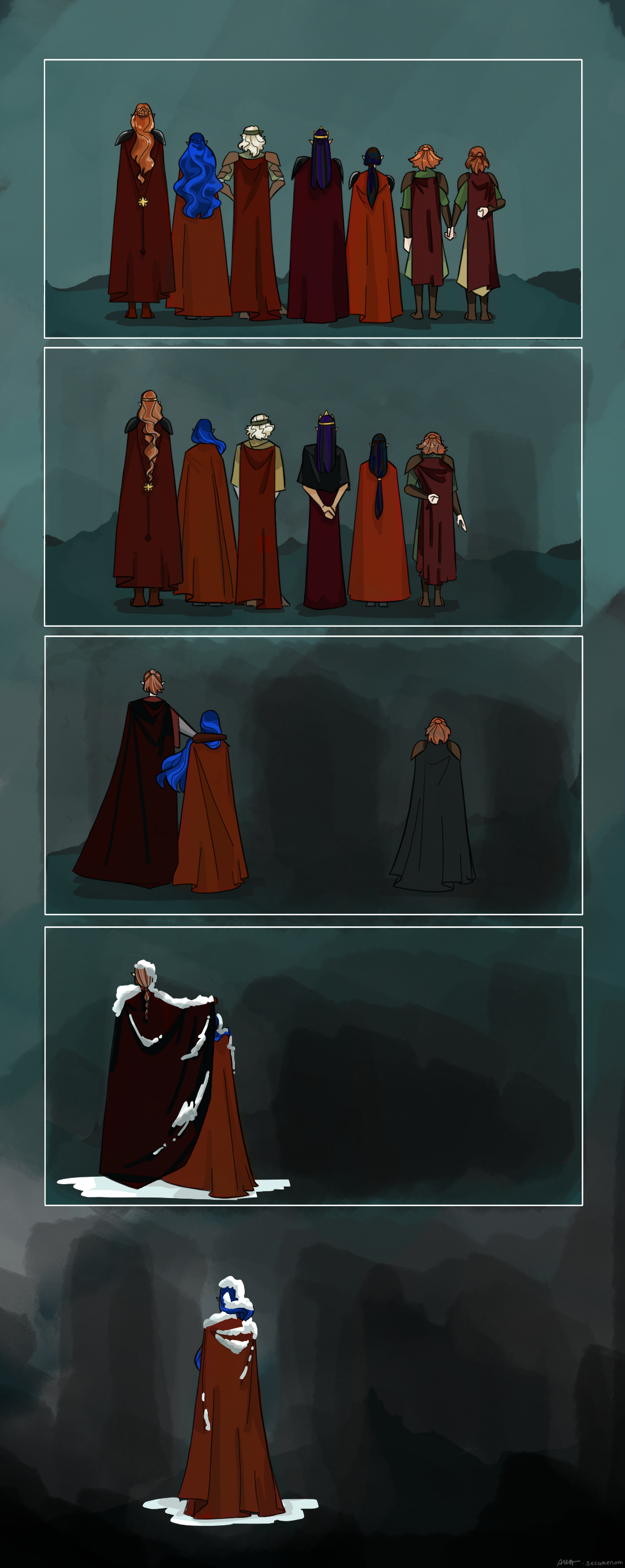
sesame: I usually like to keep my characters on the more stylized side—when I first started experimenting with digital art, simplified faces were about the limit of my figure-drawing capability, so the comic style ended up being a default style sort of situation. As I improved, I've refined the stylization to something more deliberate, since I like how it conveys expression and movement, and the combination of solid lineart and bolder colors creates a striking visual. A lot of the process has been experimenting with the style—if you look back through my old art, you'll probably notice the points along the way where I started drawing hands or noses differently! I also improved a lot by doing more realistic anatomy studies, particularly hands, and practicing painting/rendering in more detail: even though the realism skills aren't as directly involved when drawing in the comic style, the internalized understanding of anatomy and movement I gained has been invaluable in attempting more dynamic scenes and poses, especially since I tend to draw from intuition.
I've always been the "white void" kind of artist in regards to backgrounds, and when I eventually started paying more attention to the backgrounds, I opted for a softer, muted look so as to not distract from the primary focus of the characters. The particular glowing/cloud effect I tend to favor was the result of testing out different environmental texture brushes, where I realized that a dark blue or teal background paired with a light blue or yellow cloud effect maintained the tone of the scene I was drawing without being too obtrusive; since then, I usually render simple backgrounds and comic backgrounds with a color pairing to match the general emotion of the piece, or a desaturated version of the color palette I used for the characters.


I love sesamenom's art....
....and that Gil-galad, son of... drawing always makes me laugh.