
Interview with Zdenka by Himring by Zdenka, Himring
Posted on ; updated on
This article is part of the newsletter column Mereth Aderthad.
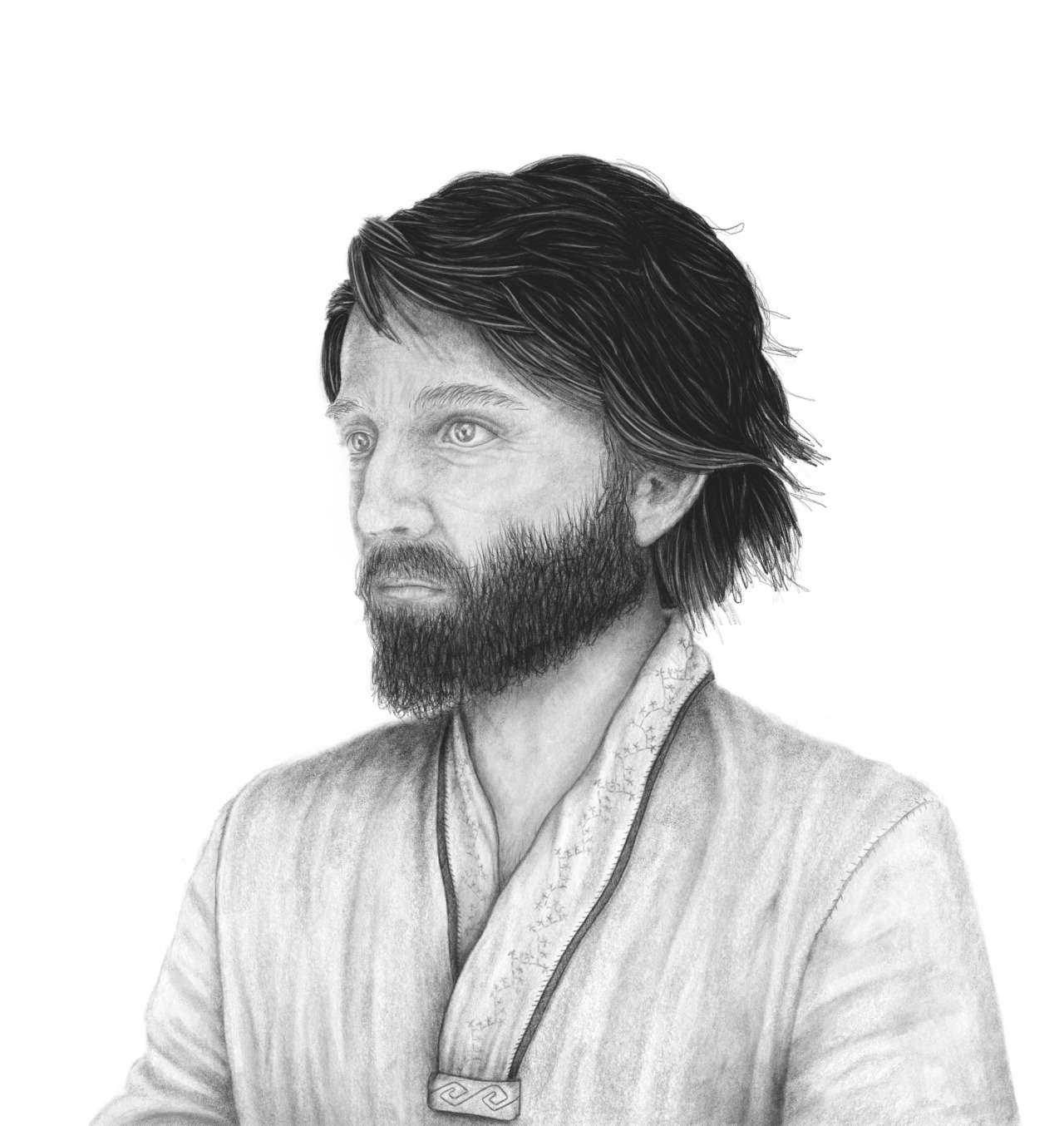
Zdenka is a fanfiction writer, a poet, and a musician who has engaged with Middle-earth through these talents for many years now. At Mereth Aderthad 2025, Zdenka will be performing both a song and an alliterative poem, the former for Acha Rezak's presentation "Mythmakers vs. the made myths: Exploring a reader’s levels of religious alienation and connection in works about and by J.R.R. Tolkien and C.S. Lewis" and the poem for Paul D. Deane's presentation "Love, Grief, and Alliterative Verse in Tolkien’s Legendarium." Himring spoke with Zdenka about her love of music and her evolving understanding of what it means to be a Jewish Tolkien fan.
Himring: Where can we find your fanworks?
Zdenka: As Zdenka, on the SWG or AO3.
Himring: What draws you to Tolkien and what is your favorite part of the legendarium?
Zdenka: My favorite things about Tolkien are his use of language and the feeling that his fictional world has depth to it. It's like a picture which continues in all directions past the framed part that you can see. I love all of Tolkien, but my favorite is The Silmarillion, specifically the Noldor and the Edain.
Himring: Since you are creating poetry and music for Mereth Aderthad, do you have any favorites among Tolkien's poetry and music?
Zdenka: Probably The Lays of Beleriand.
Himring: Why did you choose Paul and Acha's presentations to create fanworks for? What about their abstracts resonated with you?
Zdenka: Acha's presentation was the first one I chose. When I read what Acha wrote about her feelings of alienation when directly confronted with Tolkien's Christianity, that very much resonated with me. As a Jewish Tolkien fan and later a fanfic writer, I've been dealing with a very similar sense of ambivalence and, to an extent, alienation for many years—like, does Tolkien's Middle-earth have a place for me in it? I'm very much looking forward to Acha's talk to hear how she dealt with those feelings, and how she resolved them or didn't.
For me, when I first joined the Tolkien fandom, I thought I had to subsume myself into Tolkien's worldview. I tried to put myself into Tolkien's frame, as it were, or filter myself through Tolkien's own lens. It took me a surprising amount of time to realize that I could put myself into Tolkien when I wrote fic or made other fanworks, that it was "okay" to do that. Thanks to the excellent and dedicated femslash writers in this fandom, I realized that I could write same-sex relationships, and specifically f/f relationships, in Tolkien fic, to express the part of myself that's bisexual. And thanks to reading Chestnut Pod's wonderful Judaism-in-Tolkien fics, I realized that I could put the Jewish part of myself into my writing too. I could turn things around and look at Tolkien's stories and world through a Jewish lens. It's been pointed out that Tolkien sometimes let some antisemitic stereotypes slip in when writing the Dwarves. As far as I'm concerned, that means I can "reclaim" the Dwarves and interweave what Tolkien wrote about them with Jewish traditions and culture. For example, I wrote a drabble implicitly comparing Aulë's near-destruction of his "children" to the Binding of Isaac, what's called the Akedah in Hebrew. It's definitely an ongoing process for me—if you check back in five or ten years, I'm sure I'll have different answers. But Judaism isn't really about the answers, it's about the questions.
For Paul's presentation, the reasons are simpler (though I'm equally excited about hearing the full presentation): I love alliterative poetry and I think it's really neat! I've been interested in Norse mythology since I was a kid, including the alliterative verse. When Tolkien's alliterative poems about Norse mythology came out, I picked up a copy. That's The Legend of Sigurd and Gudrún, edited by Christopher Tolkien. And Christopher Tolkien, in his introductory material, explained in detail how this style of alliterative verse works. In effect, he gave instructions for writing in this alliterative verse form, although that may not have been his intention. And once I had the instructions, I wanted to try it myself. I've written a few poems in alliterative verse both for the Tolkien fandom and other fandoms, although I do find it a little intimidating. It amazes me how Tolkien makes it seem easy! For me, the verse doesn't come out easily—I really have to work at it. But I enjoy the challenge. And I was happy at the thought of writing an alliterative poem to go with Paul's presentation.
Himring: You mentioned being ready to talk a bit about your musical background, apart from what is touched on above. I know music is very important to you, quite apart from any fannish considerations. How much would you like to say about that?
Zdenka: Music is very important to me, more than I can really say in words.
I was lucky enough to grow up in a musical household. My mother is an amateur pianist, and I remember sitting on the living room couch listening to my parents' classical LPs.
I used to play violin and viola, although I no longer do. As a singer, I've been part of classical mixed choruses; amateur productions and sing-throughs of operas, Gilbert and Sullivan operettas, and musicals; filk circles; an a capella group; and a wandering group of Christmas carollers, as well as singing folk songs, traditional ballads, and madrigals. If they'll let me show up and sing, I'm there! I like singing in groups better than singing solos, both because I love the harmonies and because I'm less nervous when not all the attention is on me.


Lovely interview!
I missed the Mythmakers paper, so hoping that will be one of the ones video'ed.
I'm glad you like the…
I'm glad you like the interview!
You should see if Quente has posted the text of her paper yet. For anything about the Mythmakers paper or presentation, you need to ask Quente, not me!