Cultus Dispatches: Revelations from Marquette's Fanzine Dataset
In September 2026, Marquette University released a dataset about their Tolkien fanzine collection. Analysis of the data reveals what these fanzines contained and show how pre-internet Tolkien fandom responded to the publication of "The Silmarillion."

SWG News
New Challenge: Unquote
Choose a prompt from our selection of misheard, miswritten, and misrepresented unquotes that are in no way part of the actual "Silmarillon."
Site Etiquette Update: Fandom and Money
We have updated our policy in our Site Etiquette around linking to sites that collect money.
Character of the Month: Eönwë
This month's biography focuses on Eönwë, who started with a variety of identities but settled into the role of Manwë's herald, exemplifying the values of strong leadership and justice.
New & Updated Fanworks
[Writing] The Day Transcending Night by StarSpray
The Rings have been forged. The armies of Mordor are marching into Eriador. Eregion burns.
Far away from it all, by the shores of the Sea, Celegorm remembers his name.
[Writing] The Messenger and his Donkey by Himring
Lamaen, a Sinda of Hithlum and royal messenger, returns to his routine and re-joins his usual companion. (A vignette.)
[Writing] Nasyalossë by Lovimmy3365
Erestor lay up against a tree, brown washed to black in the wet of the snow. The black disc of the new moon sailed across the dark sky. Erestor wished it were gone. He had no need to look into dark eyes any longer.
He was dying.
(AKA Erestor unwittingly travels back in time to the…
[Writing] The Mirror Crack'd by AdmirableMonster
Rescued from a brutal Angband hunt, an ex-thrall with a strange and powerful artifact embedded in his spine is brought to Himring, for it is one of the only places in Beleriand which welcomes such folk. Though he has no memories of his life before, Anniavas slowly becomes accustomed to his new…
[Writing] The last son of Feanor by ford_of_bruinen
Maglor long after elves have left middle earth
[Writing] Darling Enemy by octopus_fool
Eärendil thought he would have the sky to himself.
[Writing] Room in the Heart by Dagstjarna
Newlywed Indis begins acquainting herself with married life, both its highs and lows.
Current Challenge
Unquote
Choose a prompt from our selection of misheard, miswritten, and misrepresented unquotes that are in no way part of the actual "Silmarillon." Read more ...
Random Challenge
Famous Last Words
Use a noteworthy last line to inspire your fanwork. Read more ...
New in References
Fandom before the Time of the Trees: Revelations from Marquette's Fanzine Dataset by Dawn Walls-Thumma
In September 2026, Marquette University released a dataset about their Tolkien fanzine collection. Analysis of the data reveals what these fanzines contained and show how pre-internet Tolkien fandom responded to the publication of "The Silmarillion."
Across the history of the "Silmarillion," Eönwë's role settles on a character who leads without taking upon himself the power to mete out justice and who acts with equanimity across some of the most harrowing conflicts in the early legendarium.
Speak Friend and Enter: Trends in Fandom Entry Year by Dawn Walls-Thumma
Across three surveys and ten years, the Tolkien Fanfiction Survey has document when authors began writing. These data reveal trends in how film promotions, the films themselves, the books, and other historical contexts have influenced not only who writes but how long they stay.
Featured Themed Collection
Beyond the Silmarillion
[Writing] For a Better World by Ellynn
Thirteen years before the War of the Ring, an orcling — more intelligent and more curious than most — is born in Mordor. His curiosity will lead him to both incredible discoveries and perilous situations, all of which will shape him into a leader unlike any Mordor has ever known. But to become…
[Writing] IN THE SHIRE-RECKONING by Diane Finnis-Robb
-This novel was completed for Hobbit Day 2026 and will be updated in serialized fashion here as I make final edits; so feedback is very much welcome.
-It is a multi-generational novel spanning a period of time from the formation of the Shire to the Great Plague in Year Thirty-six and…
[Writing] Sun on the Daisies by StarSpray
“Oh.” Frodo’s voice was soft, almost more sigh than sound. “Sam, look.”
Around the World and Web
14th International Tolkien Mailing Competition
The Hungarian Tolkien Society invites you to join the international “Quendi” category of the Tolkien Mailing Competition: five rounds of quizzes, riddles and creative tasks. This category is organised in English, open to any individual participant, and also to teams of 2–5 people. The five rounds of the competition will last from November to April.
Tolkien Food Week 2026
fandom event from the 2-8th nov 2026 where we share recipes, fics and comfort food for body and soul.
The White Oliphaunt 2026
The White Oliphaunt gift exchange, a yearly event where Tolkien fans sign up to exchange humorous gifts with each other.
Glorfindel Week 2026
A Tumblr fandom week dedicated to the elf Glorfindel.
Silmarillion Secret Stockings 2026
A fandom event to celebrate the end of year holidays with prompt-based gifts.
Fanworks Tagged with Fingon

The Court of Ardor by AliceNWonder000137
After his release from the Halls of Mandos, Melkor seduces many of the Noldor with honeyed words and accusations against the Valar. The Two Trees are ruined and the Sun and Moon arise. One of these elves, Ardana the Astrologer, leads her people to return the skies to their original form, nothing but stars. But she must destroy the Sun and Moon to accomplish that from her holds in the south of Middle Earth.
This is a non-canon story that is inspired by an MERP RPG series that was a gift from my aunt. Most of the characters and settings were from the series and some quotes and songs are taken from Tolkien's writing. It also ties in with the Wars in Beleriand and two my other two stories, The Dark Mage of Rhudaur and The Thieves of Tharbad. The story is designed to span three ages.
Hope is a weapon by Fiamma Galathon
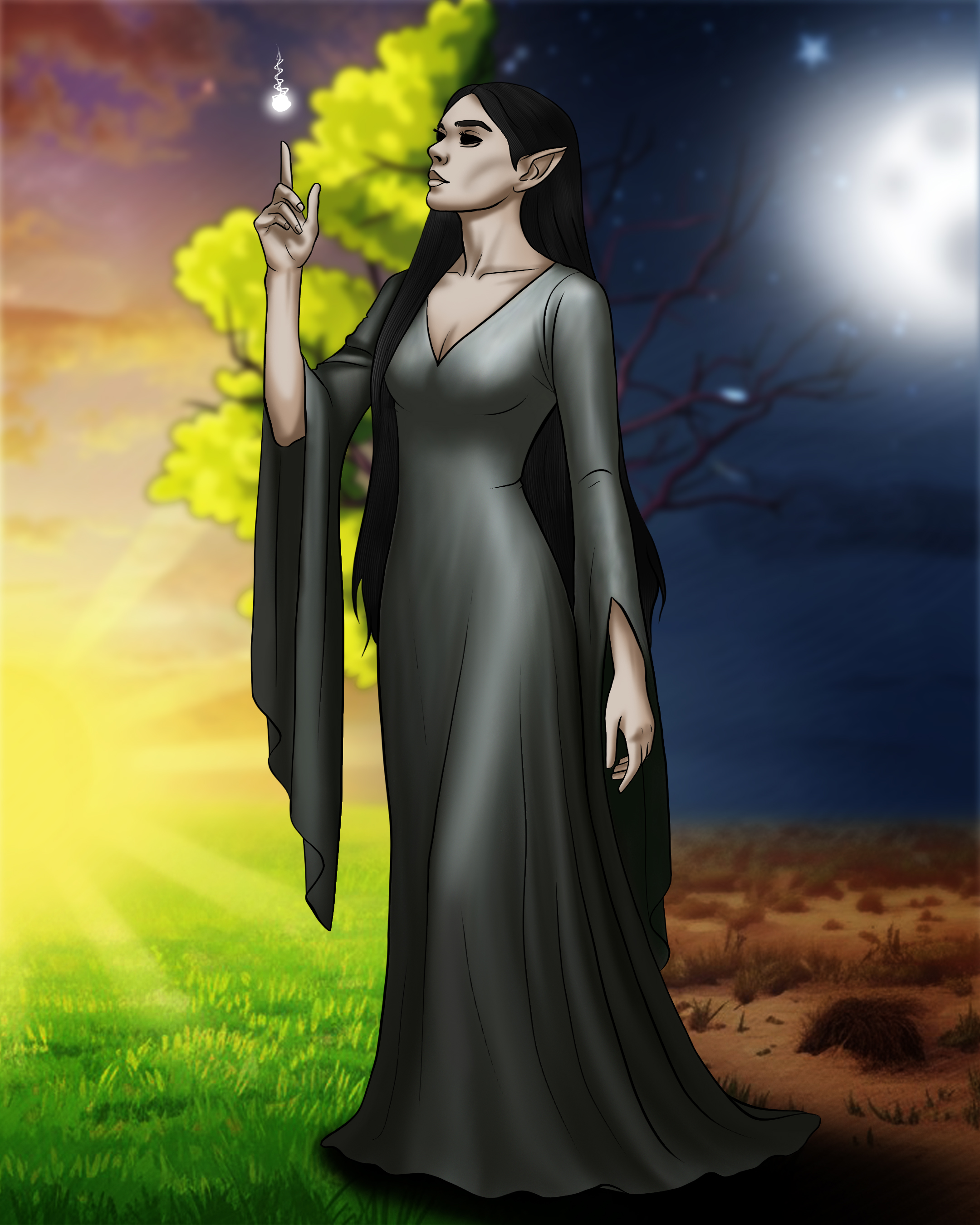
Hope is a weapon. Hope is a skill.
or, the art of not giving up in the face of the impossible, as seen through the eyes of fifteen people living in First Age Beleriand.
16 perfect 100 words drabbles, exploring this concept.
Black on white, stark and honest by Fiamma Galathon
Fingolfin is confused by the rumors that spread through the elven settlements of Beleriand like a wildfire. So is his daughter found and alive, or not? And what is this utter poppycock about Celegorm getting pregnant?
Every Second Breath by IdleLeaves
It happens - as always - with no semblance of warning. The ice groans, then shifts, and a channel of dark, swiftly-churning water cleaves open beneath their feet.
don't go blindly into the dark by atlantablack
“He is my brother,” Ñolofinwë says once more, willing her to understand. “He is half of me. What is a fëa worth if half of itself is gone?”
Ñolofinwë is scared that if he takes all that his brother is, and unravels the braid, takes out all of the love, winds what’s left back together — he is so terribly afraid that it will turn into a bitter hatred so dark and violent it may finally rival his brother’s.
He cannot risk that. He cannot. Better to die with love in his heart than live and become an angry, bitter version of himself.
Or: Ñolofinwë begins coughing up flowers and Fëanáro learns that hatred does not erase the duties of a brother.
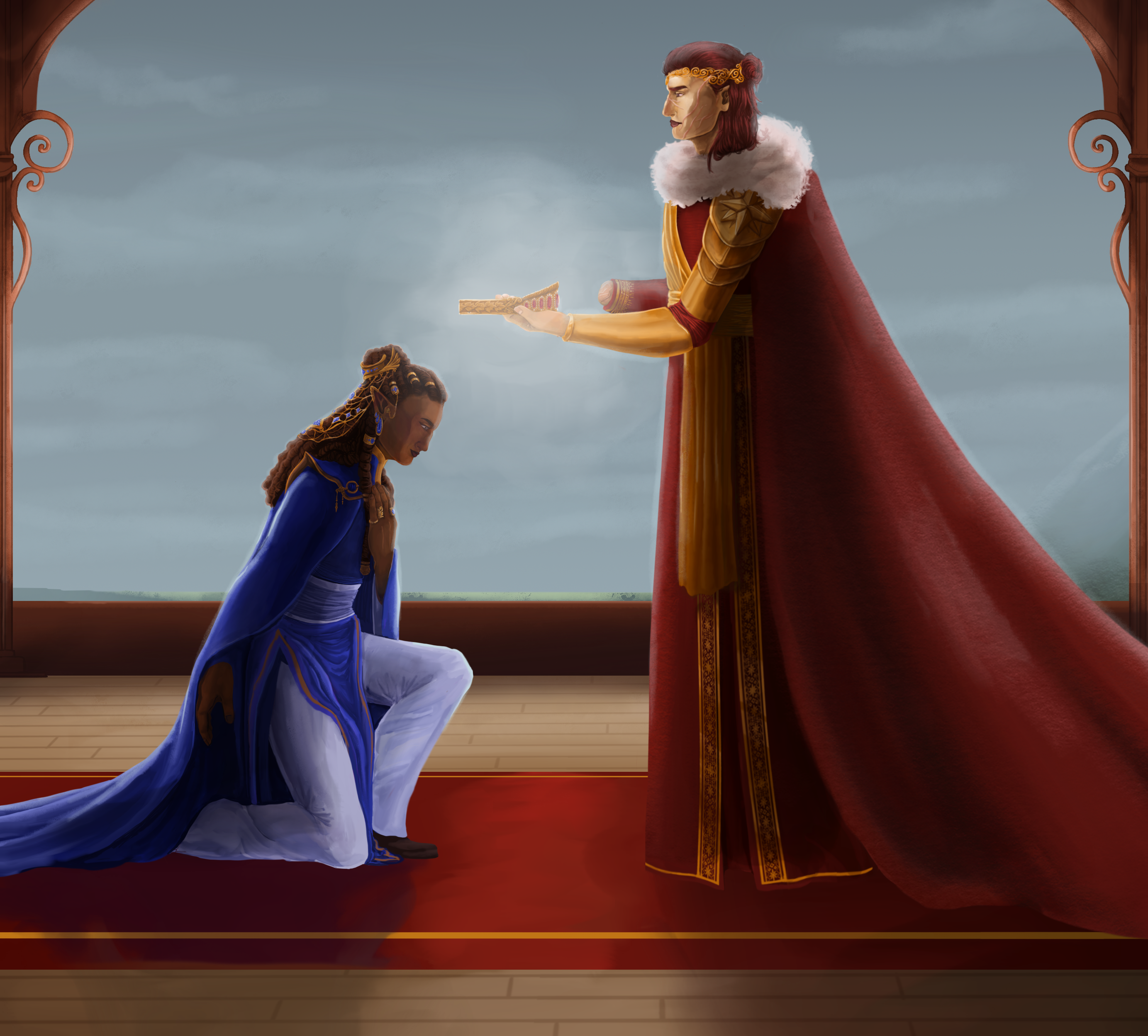
The Crowning of Fingolfin by ShadowKat379, queerofthedagger
The formal ceremony where Maedhros hands over the High King status to Fingolfin.

A Wing and a Prayer by silmalope
Fingon’s prayer. Last-minute sketch entry for the 40s monthly challenge!
A Hundred Miles Through the Desert by StarSpray
“Come on.” Maedhros grabbed his hand and pulled him along down the path, both of them quickening their pace now, until the trees opened up into a wide meadow filled with flowers, bright yellow celandine and dandelions and sweet-scented pale chamomile mingling with cornflowers and irises. On the other side of it was a larger party than Maglor had ever seen in Lórien—five figures sitting in the grass. Huan barked again, and they all looked up. “It seems everyone has come to fetch us home,” Maedhros said, laughing, as all their brothers scrambled to their feet.
After years in Lórien, Maglor and Maedhros are ready to return to their family and to make something new with their lives--but to move forward, all of Fëanor's sons must decide how, or if, they can ever reconcile with their father.
as I prune my feathers by arafinweanappreciation
On the night after the coronation, the wind was cold. Fires still burned in the north; their light could be seen, flickering on the far reaches of the horizon, but they provided no warmth. A figure stood on the ramparts of the keep at Hithlum, where the ceremony had been held, more solemn than joyous. The wisdom of having so many of the rulers so near the great darkness to the north, given what had happened– what was happening– was questionable, at best. But their luck held. For now.
A conversation between two kings of the Noldor.
Bend Over Boyfriend by averytinylizard
Fingon makes a small request to Maedhros. She obliges.
featuring Trans Fingon and genderbent Maedhros.
to die in two places at once by averytinylizard
Ósanwë gives an intimacy to relationships that is almost unmatched.
the marriage of true minds by averytinylizard
They marry in a field, years after leaving the halls.
we three together by averytinylizard
After the Dagor Aglareb, Maglor and Fingon help Maedhros relax.
Distant sequel to this fic, also featuring Maedhros as a trans woman.
That Forlorn Lover by Elrond's Library
Fingon's rescue of Maedhros in An Attempt at poetry
For the July 2025 Challenge Swinging 40s
a thief in the night by averytinylizard
Fingon steals Maedhros away a hundred times during the long peace.
Double drabble
their fathers' sons by averytinylizard
Findekáno, son of Fëanáro, and Maitimo, son of Nolofinwë, have always been close. A pity, then, that their fathers' relationship trickles down to them.
A role reversal fic
white on red by averytinylizard
Fingon knows that it is reasonable for Maedhros to go east, good, even. That doesn't mean he's happy about it.
I Will Remember You at Moonrise by Isilme_among_the_stars
Argon, my sweet, foolish, impetuous youngest brother, ran ahead. I found him, you know, before he died.
Fingon remembers the first rising of the Moon and Sun, mourns his youngest brother and resolves that his cousin will not share Argon's fate.
A reputation for rakishness by averytinylizard
It is an unfortunate fact that Findekáno has a reputation for making girls think he is courting them. Maitimo, as his friend, knows that this is simply a miscommunication, a disconnect between Findekáno's easy affection and the norms of Tirion. Knowing all this does not help him at all.
Helmapellopë by averytinylizard
The mood in Maitimo's house has been dark these last few years, and his father's eyes have been following him.
Inspired by the fairytale Donkeyskin
Childhood Comrades: Russo & Finnu at Kozhikode Youth Festival by Zara BalrogBalls
Maedhros and Fingon, ie Russo and Finnu from Prayers to Broken Stone, 19 years old and up to no-good at all. If you want to know why they’re dressed up like a Mecca pilgrim and a Roman cardinal, check out the snippet in the notes!
Love, Not Wisdom (Drabbles about Men) by Elrond's Library
A collection of drabbles primarily featuring male characters from the Legendarium
A Measure of Tears by Himring
About the Battle of Unnumbered Tears.
words unsaid 'till morning comes by queerofthedagger
“I do love you, Russandol. You know I do, do you not?”
For a long, drawn-out moment, Maedhros only stares. Something is taking root in his chest, something he knows, then, he will not be able to extricate from himself again. “I know,” he says, voice rough. “I—“
But Fingon stops him, pressing a hand to Maedhros’ mouth. “Don’t, not yet; tell me when we see each other next.”
Five times they share their own small ritual upon separation and reunion, and one time it takes a little longer than either of them can endure to mark its completion.
Whatever You Say, Ace by Isilme_among_the_stars
Everyone, including the Valar, are convinced that Fingon and Maedhros are romantically involved no matter how many times they explain that they very much are not. When will they get it through their thick skulls that there are other ways to love? Apparently not soon enough. When the Valar decide to involve Maedhros and Fingon in their meddling, it leads to some interesting circumstances.
A queerplatonic take on Maedhros and Fingon's relationship for Russingon Week, with some Gil-Galad parentage exploration for fun.

