Cultus Dispatches: Revelations from Marquette's Fanzine Dataset
In September 2026, Marquette University released a dataset about their Tolkien fanzine collection. Analysis of the data reveals what these fanzines contained and show how pre-internet Tolkien fandom responded to the publication of "The Silmarillion."

SWG News
New Challenge: Unquote
Choose a prompt from our selection of misheard, miswritten, and misrepresented unquotes that are in no way part of the actual "Silmarillon."
Site Etiquette Update: Fandom and Money
We have updated our policy in our Site Etiquette around linking to sites that collect money.
Character of the Month: Eönwë
This month's biography focuses on Eönwë, who started with a variety of identities but settled into the role of Manwë's herald, exemplifying the values of strong leadership and justice.
New & Updated Fanworks
[Writing] A Language Deeper than Words by gaydhros
Colour now has returned to him. His cheeks and nose are pink with the early morning chill, his grey eyes are bright, and he is well enough to manage daily walks along the lakeshore with Fingon, a few dawn-quiet moments stolen together before the rest of camp wakes.
[Artwork] Fingolfin‘s Last Stand Monument by Fuin
Fingolfin‘s Last Stand Monument on the Square of the High Kings in Tirion, digital art.
[Artwork] Thangorodrim by Fuin
Night spreads from the peaks of Thangorodrim, digital art.
[Writing] Silmarillion Non-Con November 2026 by AngbandThrallNo.1035
This is my collection of ficlets for the various prompts of Non-Con November 2026, I'll update the tags as I upload my fics, each prompt will be a new chapter. This writing event specifically focuses on the absence of consent, so keep that in mind!
Day 1: Groping (Maeglin/Dark!…
[Series] Instadrabbling, 2026-Present by SWG Moderators
We get together from time to time on the SWG Discord and produce spontaneous fanworks based on randomly chosen prompts. This collection includes drabbles, ficlets, and other flash fanworks produced as part of our instadrabbling sessions beginning in 2026.
[Writing] Disco Demolition by kimikocha
“We’ve worked together,” says the stranger with fire in his hair. “We’re investigators.”
Everything he says is technically true.
Inspired by Disco Elysium and written in the game's style, but not a crossover. Familiarity with the game isn't necessary for this fic.
Current Challenge
Unquote
Choose a prompt from our selection of misheard, miswritten, and misrepresented unquotes that are in no way part of the actual "Silmarillon." Read more ...
Random Challenge
Gift of a Story
Create a fanwork as a gift to show thanks and appreciation for someone in the fandom. Read more ...
New in References
Fandom before the Time of the Trees: Revelations from Marquette's Fanzine Dataset by Dawn Walls-Thumma
In September 2026, Marquette University released a dataset about their Tolkien fanzine collection. Analysis of the data reveals what these fanzines contained and show how pre-internet Tolkien fandom responded to the publication of "The Silmarillion."
Across the history of the "Silmarillion," Eönwë's role settles on a character who leads without taking upon himself the power to mete out justice and who acts with equanimity across some of the most harrowing conflicts in the early legendarium.
Speak Friend and Enter: Trends in Fandom Entry Year by Dawn Walls-Thumma
Across three surveys and ten years, the Tolkien Fanfiction Survey has document when authors began writing. These data reveal trends in how film promotions, the films themselves, the books, and other historical contexts have influenced not only who writes but how long they stay.
Featured Themed Collection
Beyond the Silmarillion
[Writing] For a Better World by Ellynn
Thirteen years before the War of the Ring, an orcling — more intelligent and more curious than most — is born in Mordor. His curiosity will lead him to both incredible discoveries and perilous situations, all of which will shape him into a leader unlike any Mordor has ever known. But to become…
[Writing] The High Pass to Gondor by octopus_fool
Eorl heard it before he saw it: the sliding of stones as they crossed the high pass into Gondor.
[Writing] Aftermath of a Riot by Susana_R
It's never fun to wake up with a concussion. Fortunately for Faramir, he has Elrond, Aragorn, and the rest of Aragorn's family to help him make the best of a difficult day.
Around the World and Web
Tolkien Siblings Week 2026
A fandom event focused on sibling relationships in the Tolkien legendarium, running November 23rd to 29th, 2026!
Ainur Week 2026
A Tolkien fandom week dedicated to the Ainur!
Glorthelion Week 2026
A week dedicated to Glorfindel x Ecthelion relationship
Nolofinwëan Week 2026
Nolofinwëan Week is Tumblr fandom event celebrating the House of Fingolfin, running from November 9th - 16th
The White Oliphaunt 2026
The White Oliphaunt gift exchange, a yearly event where Tolkien fans sign up to exchange humorous gifts with each other.
Atandil by Eilinel's Ghost
| | |
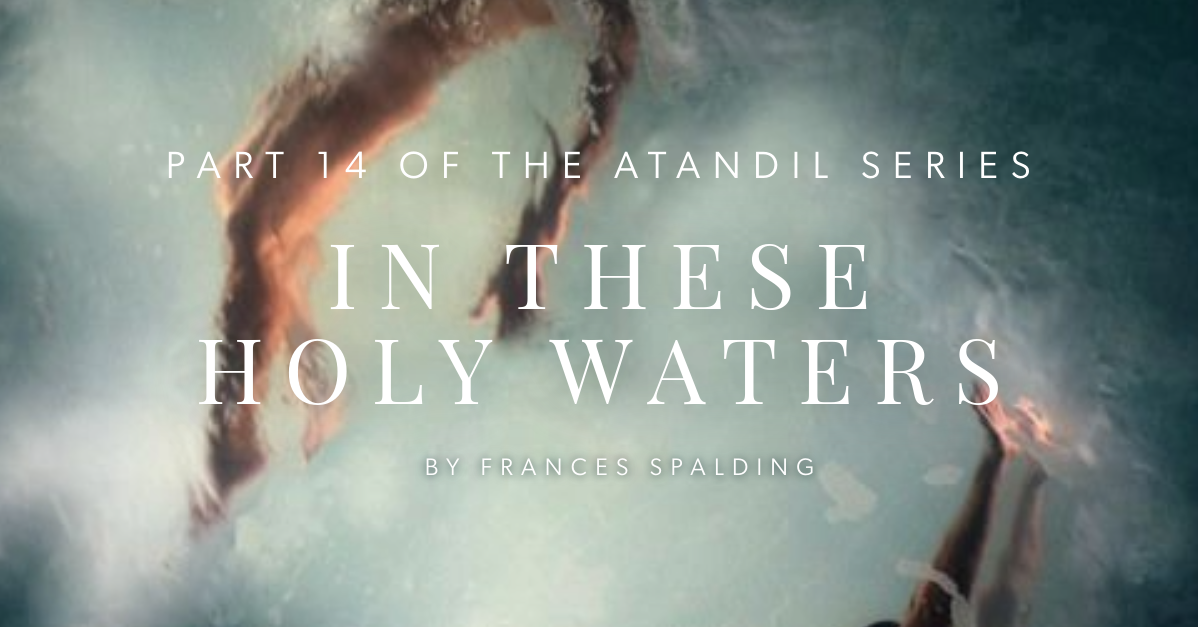
14. In These Holy Waters
His voice was hoarse as the weight of his helpless ardor bore down upon him and the water’s one epiphany flowed through his heart with bitter clarity: it was inescapable now, the truth and the reckoning.
It is Yestarë, the first day of spring, and Balan joins Finrod and a small company in their yearly pilgrimage to Ivrin, and to the holy spring in the hills above. Finrod is haunted still by his recent discovery of the Atani's lifespans, while Balan finds he can no longer keep a confession from his lips.
312th YEAR OF THE SUN, SPRING
The Pools of Ivrin
Finrod’s dive cut through the surface, hardly leaving a splash as he slipped beneath Ivrin’s mere. The water was ice, as ever in these first days of spring when the falls roared down from the heights, filling the basin with snowmelt from the shoulders of the Ered Wethrin. It was a cleansing draught that woke the long slumber, winter shearing away through the glass and light.
Once, any cold plunge had borne his thought back to Yestarë and this yearly pilgrimage to Ulmo’s Well. But as he glided through the current, it was the waters of Ivrin shifting into a remembrance of that other reverence—Celon, with his wide, easy movement; Celon with his ice and his burning knowledge.
Finrod drew his mind back with an effort. He was in Ivrin’s lake, fed by the holy well, the current alive with the presence of the Lord of Waters, the brilliance encircling him. He was home.
Balan had told him once, when their dead were buried on the road from Ossiriand, of his own people’s tradition—the world had been formed from the goddess of earth, from the god of water. Each poured themselves throughout its making and each, therefore, was bound till the end of time within the rock and earth, the ice and rivers. No forms did they reveal beyond these elements, for none could they take on without drawing their sustaining presence out from the world. Thus through the ceremonial washing, the fallen were wrapped in Guënid’s embrace. In burial, they returned to the arms of Melishk.
So it was here, Finrod thought as he surfaced and the air refilled his lungs. The Sea would not have him, Ossë would rage if ever he drew boat from shore, Uinen would turn her face aside. The Valar no longer walked beside them in raiment of flesh, but here in these holy waters he was held again as in the sea-brine of Belegaer, and his heart sang in exultation with the hymns of his mother’s people. The melody spilled out from his lips, bright as the shimmering water, and as its echoes rippled over him from the surrounding stone, he plunged once more beneath the surface.
There through the water he felt the others suspended too within that chorus. Canneth and Lithui, Edrahil’s dive twisting round in a great loop, weightless. Sídhon wading carefully from the shore and young Gwindor hurled laughing from his brother’s arms. Gildor—dear, beloved boy—soaring through the water with abandon, hands outstretched and grasping after some elusive kinship with his father’s heritage. Each of them woven through the waves, each wrapped in Ulmo’s embrace.
The water whispered nothing of Balan. Had he not yet followed them into the lake? Or, dread thought, was this judgment rather—a reprimand, a holy reminder of that gulf he must never tempt? Finrod twisted through the current and surfaced once more, casting about for the other. There he sat, perched on a low outcropping—merely ashore, then, and no rebuke from the water’s lord—cross-legged and watching the swimmers with a quiet contentment.
“Ai!” Finrod's voice danced over the waves, merry in his relief. “Tarrying yet?”
“The bank is warm,” Balan called back in amusement, “and moreover dry.”
Nóm laughed and dove once again, piercing a swift line through the water, a golden dart beneath the still glass. The lake was deep along the shore where Balan sat, the rock jutting out over a sheer edge of the basin, and Finrod emerged a less than a stone’s throw away. “How now, father duck,” he said as he closed the distance to hover within arm’s reach, grinning, the sunlight glinting from hair and water alike, “no love for the streams and meres?”
Balan snorted. “I’ve love enough, only little inclination to be a curiosity.” His glance drifted briefly to the other swimmers as he leaned back on his arms. It was one thing to splash after Nóm bare as birth, it was another matter entirely to plunge in amid the king’s guard, kin, and counselors. Ever since his arrival, he had sensed their intrigue as a thread running through every interaction, marking each difference with fascination; never unfriendly, but he squirmed nonetheless beneath the scrutiny. And his spine crawled at the thought of facing it stripped within the sheer water. Nóm’s thought brushed across this strand of abstraction and Balan flinched at his immediate concern, but did not push him away. “They mean no malice,” he added with a wry grimace. “And besides, I’ve learned well enough not to follow thee into the springtime torrents. Twas a week ere I felt my toes after thy last convincing.”
“Aye, but that was not hallowed water,” Nóm said, as he reached up to hold himself by the stone, and his teasing was warm in Balan’s own tongue, “and here the King of the Sea would surely spare your limbs.”
“Hm.” Balan shifted forward till his legs hung over the edge. “Would he? I shall test him first and learn whether he is merciful ere I try him with the whole.” He held his toes suspended over the water and looked down at the other with an impish grin. “Shall it be mercy, then, my lord of the water?”
“Blasphemy, Balan, is a precarious place to sit.”
And then in a swift motion Nóm launched up, leveraged by his grip on the rock, and caught the other about the waist with his free arm. He had found a foothold on the basin’s edge and pushed off at once to send them plunging together into the shimmering waves. For a brief moment they were suspended beneath the water, another tangled embrace, and Finrod felt his heart pounding at the reprisal. Perhaps he had done it deliberately, muttered the shrewd afterthought as the mirror of that first embrace coursed through him like wine. But this time he released Balan at once, and the water drew them apart as they rose in tandem to the surface.
And as before, Balan laughed as they emerged and shook the hair from his eyes. “Do you drown your impious, then?” he asked with wry grin, catching his breath.
“Not generally.” Mirth danced impish through Finrod’s eyes, then there was a flash of consternation and his hand slipped beneath Balan’s arm. “Thou canst swim with the added weight?”
“As insulting as Bel, thou art, thinking me ever half-returned to the clay.” He pushed off toward the center of the lake, a quick grin over his shoulder and a brush of affection against Nóm’s thought. “I can swim clothed without risking the grave, wingildi.”
Fire rushed through Finrod’s veins as the name tripped toward him across the water, wrapped in Balan’s voice—and like the páni of those long lost harbors, he followed after him through the waves. Harbors and seabirds and Balan; each passing, elusive and fleeting before the edge of his grasp. His hands stretched out as Gildor’s had done, reaching open and desperate into the cold before him as he raced forward in pursuit. The water’s song held Balan now as well as the others, but it was a fleeting melody, a stranger’s greeting, a father’s dirge. It whispered comfort too, and sympathy for his own heart, but he closed his ears in fury and swam faster. Consolation ere the wound was an insult, naught but a reminder of where the strike would fall.
“Can you drown in hallowed water?” Balan asked dubiously as they reached the midpoint, and his voice drew Finrod back from his meditations. He was treading in place a few lengths ahead with his shirt billowing about him, a cloud of deep green swelling through the crystal water. The sun’s glint had turned his hair to onyx, polished and shining, and the droplets within it glistened like uncut diamonds. He was breathtaking—and Finrod felt the melancholy give way before his presence, this tangible, living joy.
“I confess I have never tried,” he replied and the laughter was once more woven through his voice. A quick smile flashed across the water. Then his breath rushed in and he dropped without warning beneath the mere.
“Nóm?” Balan peered after him, first in bewilderment and then in unease. He could see the figure hovering below him, only an arm’s length or two he guessed, but it gave no sign of rising. He held another moment, attempting to gauge the depth, then filled his own lungs and plunged after him.
The cold pressed in at his ears as he heaved himself downwards. Nóm had not seemed far down, he calculated, the water thrumming around him, and his own descent was swift. He must have come nearly level with the other by now. His arms reached out through the current, slowing his motion, and he opened his eyes.
It was pristine. Light flooded down from the noontide sun and pierced deep into the basin. He could see all the way to the shore, the crags where he had perched only a few minutes before shining crisp and vivid through the water. And there to his right—Nóm dazzling in the midst of it. A cloud of gold, his hair floating about him; his body suspended as though caught in glass with the shimmering light cascading along its facets.
Balan’s heart was pounding. He drifted, caught too within the glimmering pane; frozen as he stared with eyes transfixed and veins burning. Each line lay traced against the radiance, the muscles curved in gentle knots about his figure, the sinews taut, the limbs lithe and strong. Balan was abashed at the hunger of his own gaze, but neither could he draw it from the porcelain figure hovering before him, naked and flawless and all his desire. He was pinned by the sight—like the serpent’s prey, Estreth’s voice whispered through his memory—even when the other’s eyes opened to meet his and the quick smile drew a new surge of warmth through Balan’s blood.
Air. It was the sudden panic of suffocation that at last broke the trance, and he launched toward the surface, gasping as he broke through into the breeze. Nóm emerged beside him a moment later, laughing and unwinded.
“Not drowned, then?”
“Not thou, at least.” Balan sent a cascade of water into the other’s face. “Impossible creature. I’d think thee gilled if I knew no better.
“Gained from a youth of idleness beside the sea, or so my uncle and cousins would tell thee. They may be craftsmen fine of gold and steel, silver and gem; but I and mine have wrought of the water’s motion and of light too. Yet dissemblers are they all, for tis our supposed idleness that fetches for them their pearls.” Another quick flash of mirth, and with it his youth leapt out again, startling and sunlit as it had been at the fen crossings, or when placed alongside Meril at feast or council. “In this, at least, I am my mother’s child. Did you hear the water singing?”
“No.” Balan laughed as he looked on him, hair slick as silk along his scalp, and tendrils of its gold snaking now about his own shoulders as well. The heat burned yet within his blood, and he felt the pulse throbbing through his ears, his teeth. “I begin to think Bel had the right of it—thou wilt ever turn a song where none is sung.”
“It sings of thee, Balan, and thou hast heard it not?”
“Nay, I’ve told thee. Naught but the muffled rumble—a lake, Nóm, and no more.”
Finrod hovered before him, perplexed and fascinated, then stretched out his hand. “Come,” he said at last, “I’ve a way to show thee, I deem.”
Balan reached out in mute acquiescence, shivering as he set his hand within the other’s palm and his met that flesh which he coveted only a short moment past.
“Bother not with sight; I shall lead thee. Only listen well, and let thy thought lie open.” With a quick smile he moved forward, drawing Balan at his side. And then, as they slipped once more beneath the still surface, Balan felt the other’s presence wash over him as well—bright as ever, but lit now with the crystal clarity of the mere about them, spreading through his thought with the rolling strength of a current. And with it, to Balan’s surprise, the water’s murmur shifted as they swam and it too became pristine and discernible, tangible as the facets of light piercing the glass about them. Music it was indeed, but not in any way he had supposed. He was listening through Nóm’s ears, the cadence ebbing and flowing, and within it danced pitches that his own senses never perceived, tones beyond his comprehension. He hovered, dizzy with it, leaving off his own strokes as he listened in awe and Finrod towed him in his wake beneath the water.
Nóm had raised him to the surface by the time Balan found he was again short of breath. He had the measure of him now, Balan thought with warmth, slipping within his mind as Esrid had once slipped into his coat, sliding her arms through the sleeves alongside his own so that they moved together, each motion in concert, laughing in the cold. So Nóm’s thought too spread within his mind, formless limbs aligned together, tendrils of perception moving as one—and Balan’s senses reeled with its intimacy.
Again they dipped beneath the surface, and again the song passed from Finrod’s ears to Balan’s discernment, and he attended more closely now to what he heard. He had expected words within its music, but like their woven minds, this too spoke by intuition and presence. Sensations rolled through his spirit like the waters themselves. Seeing. Knowing. Awe and recognition. Grief and wonder.
He was wrapped at first in the warmth of it—the water sang of him, it sang of his people. They were known after all, children beautiful and intended as Nóm had said. Beloved and whole, even in their frailty. But why then could he not hear it with his own ears? Why did Nóm’s Valar sing of them, but only in a melody they could never perceive? If Nóm could learn Balan’s tongue in such short measure, surely his gods would be of no lesser skill.
They broke through the surface once again and Balan felt his bitterness choke as he met the other’s eyes, eager wells of joy sparkling above the water. How beautiful he was in his delight! The guess had been hazarded and proven true, and the intoxication of sharing it poured from him like warmth. And Balan could not deny him. He clasped the hand more tightly within his own and returned Nóm’s gaze with mirrored joy. Then with a laugh they slipped again beneath the glass and he followed Nóm forward through the chorus.
❈❈❈
By midday, they lay in a scattered cluster upon the grass. It was a sunlit cove, jutting off in a divot from the main water, sand lining the shoreline with freshets of new grass encroaching about its edges. A restful clearing, filled with the laughter of the falls and wind whispering through the beech leaves.
Balan had borne up longer than expected in the icy current, but at last he broke from the group splashing beneath the falls and swam back to the sun-baked rocks, the day’s heat as unseasonable as it was welcome. He had stripped at once, no longer abashed in his urgency to be warm, and layered a heavy tunic over his fresh shirt and breeches. With his teeth still chattering, he decided that was not sufficient and pilfered a fur-lined cloak from where it lay draped over the king’s saddle bags, then returned with it to the bright sunlight beside the shore.
Sídhon was the first to join him. He rose from the shallows and shuddered in the breeze, a sleek hound shaking water from its fur, and laughed to see Balan huddled beneath the heavy cloak and tucked against a warm boulder.
“The light smiles upon you, Anorhín,” he said as he dried himself and retrieved his own clothes from the bank.
“Smile or frown I’ll welcome equally,” Balan replied with a snort, “so long as it thaws me. I’m frozen through.”
“So you appear.” Sídhon dressed, then procured a flask and filled the cap with a mouthful of liquor, clear and fragrant. “Drink this,” he said as he passed it to him. “My lord would hold it poor hospitality were I to leave a guest in discomfort when remedy was to hand.”
“Awiluth.” His thanks fell without thought into his own tongue as he raised the drink to his lips. He had been drawn back to the winter in Estolad by the familiar scent, when they huddled, numb and shivering, around the fire in his hut. He and Baran had worked through the night to keep the animals from freezing amid the snowstorm, and in the early hours of the morning Nóm produced a similar flask, dispensing a splash into each of their cups. The old ache rose with the memory and his heart lashed out at the absence of his sons, drawing up his remorse to darken the midday.
Balan had shut himself in his apartments for three days after Belen returned to Estolad and his brother’s side, speaking to none and permitting not even the king to break his solitude. He huddled alone with his grief and anger, and stoked his shame with their persistent company. But at length the storm subsided and he emerged, wan and quiet, to drift through the sunken atrium in the morning light. Nóm spied him through the latticework of his own rooms and crossed at once, gathering him within his arms and drawing him back into the shadowed cloister to hold him tucked beneath his chin; and Balan had clutched him desperately in return and sworn out a bitter torrent upon his shoulder till the grief lay spent and shaking against the other’s heartbeat.
Nóm had believed it was sorrow that drove him to isolation—and Balan did not correct him, for in part it was true. But heartache he could face in the other’s company, indeed he was eased by it, whereas it was the furnace of self-loathing that demanded solitude. And such it was that came upon him again at the winter’s remembrance. He shoved it aside and downed the liquor in a quick motion, hoping for some improbable cleansing in its dregs. But it merely coursed through him as it had in Estolad, cascading warmth through his heart and easing the tight chill that stiffened every sinew. It was enough, Balan decided as he leaned back against the boulder—mitigating the cold was a very passable balm for the moment’s ills. He let his eyes fall shut and basked in the heat of the sun on his face, the lull of the falls, the sounds of preparations about him as the long minutes ran together.
“Have I driven thee to theft, Bëorinya?” The king’s voice drifted over him, affectionate and amused, and Balan started awake at the sound. Most of the swimmers had returned while he dozed. Gildor and Edrahil sat on the grass nearby and Nóm stood half-dressed before him, shirt in hand and a grin dancing upon his lips.
“Nay, my liege, I would be dry on the rocks yet hadst thou judged with mercy.” His own grin mirrored back in kind, eyes alight and teasing. “This is but a weregild for my warmth and leisure.”
“Held in negligence of my vows already!” Finrod laughed and toweled his hair with the shirt. “The cloak is a just recompense—I cede it to thee.”
“I accept this restitution,” the other answered in a magnanimous tone, shifting to lie stretched upon the grass with the prize bundled about him. “My vengeance is assuaged.”
“And my reign mercifully intact,” the king retorted as he moved to take Balan’s place against the boulder. He reached out after a moment and touched his fingers to the other’s cheek, testing his warmth. “Truly, though, I’ve not set thee to harm by it?”
“And if I say thou hast?” Balan chuckled at the instant rush of concern, then drew the hand to his lips and kissed the twined serpents in a show of penitence. “That was churlish of me. I’m flesh, not glass, Nóm. I should not tease thee so.”
Finrod let out a breath in mock affront, but his gaze was warm as he looked down at the other, resting amid the snowdrops and spring violets. “Impudence,” he said, and a smile eased across his features. He plucked a handful from the riot of flowers and began braiding them absently into his hair as his eyes drifted over Sídhon and Gelmir preparing the midday meal, Edrahil and Gildor weaving their own wildflowers into chains and circlets beside him, Gwindor standing quiet at the water’s edge and watching the light play over the surface. As ever, he was struck with the incongruity of these lands. To have his heart lift in such joy while the Siege lay only a few days’ ride to the north seemed an irreverence almost, an affront to those who yet held the lines of battle. By what privilege did he rest here beside the wandering mere while his brothers patrolled the highlands, while Maedhros sat in vigilance atop cold Himring and his uncle gazed unflinching across Ard Galen toward the gathering gloom? Again he felt his confidence falter, again the nagging doubt prodded his shame—was it foresight or cowardice that had laid the hidden refuge upon his heart?
The gradually, Gildor’s voice drifted through his musings. He sang a simple melody, slow and quiet, the words a blended murmur as he wove flower stems in and out of the growing chain.
O child, O child, make wary your wandering.
O child, O child, mind what waters you seek.
O child, O child, look not in the brook or the riverbed
when all is still, and the starlight chill.
O mother, O mother, beware the mud slithering.
O mother, O mother, heed the river-song.
O mother, O mother, wade not in the mere or the mountain spring
when dark the hill, and the raven shrill.
Finrod’s hands stilled in their work as he listened to his foster-son’s voice, reaching out like a ghost of the past. He and Inglor had learned it together on the cliffs above Alqualondë, flashes of silver and gold darting through the sea-grass while Meril sang as she looked out over the rolling waves. The melody was one she had carried with her from Cuiviénen, a relic of those fears and traditions, and Inglor would ask her to sing it whenever they came across her amid their play. She sat often upon the cliff-tops in those days, perched upon the same ledge with her eyes fixed upon the east, and as a child Finrod had been both fascinated and unnerved by the ritual, each day marking a past that was gone beyond reach, a home that no one believed she should miss. His heart ached now at the remembrance, as it did too to look across at Inglor’s son and see the echo of his friend’s profile against the waving beeches, to hear the same mild voice drifting through the air. He realized his own voice had lifted up in response, and it too seemed a phantom as it joined in the song.
O father, O father, mark well the riverbank.
O father, O father, make your guide the current strong.
O father, O father, swim not through the stagnant stream
when frogs trill, and the reed-pools fill.
O lover, O lover, come dance in the meadow-lands.
O lover, O lover, the waters are bright!
O lover, O lover, we will sing by the waterside
when bold the will, and the senses thrill.
“Tis long years since I’ve heard that sung,” Edrahil remarked as they finished.
“You know it?” Gildor looked over at him in interest.
“Mm. In my youth, I sang it often with my lord and your father.”
“Did you learn it from Merillë, Hilyo?” Finrod asked. “Or did we teach you later in Tirion?”
“In Tirion. I knew her little before the journey.”
“What is it?” Balan asked curiously from the ground. “It reminds me of some of our own.”
“It is from the days of our own awakening,” Finrod answered, “away in the east, long ago ere the earth was broken and Cuiviénen lost. There were many warning songs in those days. The Foe’s servants were not idle and even those things we loved were oft turned to our fears. This that we sang was of my mother’s people—Gildor’s father’s people—and warns of wraiths in the waters.”
“It was one of the explanations for those who went missing,” Gildor added as he gathered another handful of cinquefoil. “There was the Hunter, turning the Valar to fear. The jealous Watchman who stole those gifted in skill, and turned the joy of making to danger. And there were the water wraiths, drawing the unwary down through the dark.”
“Water wraiths, you say?” Balan glanced over at Nóm with an arched brow. “Attacking the unwary?”
“Thou hadst warning aplenty,” he retorted, reaching out with a chuckle to poke a violet into the other’s beard, “and heeded it not.”
“Haven’t your people a tale of this sort, Bëor?” Gildor shifted to make room as Gwindor joined them from the waterside.
“Of wraiths in the water?” Balan frowned for a moment in thought. “Do you mean Aelthes and the atna-ahma?”
“Yes, ’twas such I had in mind.”
“Aye, it is similar in some ways. I’m surprised you know of it—I’ve no recollection of telling it to Nóm, but I suppose there were fables aplenty in the long winter and it’s like enough I’ve forgotten their full number.”
“Nay, Belen it was who told me. We passed many an hour with tales on the road from Estolad.” He passed a handful of flowers to Gwindor, then glanced back toward Balan with a quick smile. “Though I knew many from Ingo’s telling already, so he was hard pressed to find ground untrodden. It is little wonder he resorted to those less recounted.”
“It’s true, we do not often tell it.”
“But thou wilt tell us, surely?” The pale foot nudged his leg and Finrod’s eyes were upon him, jest and curiosity vying in equal measure.
“Aye, you glutton,” Balan replied in his own tongue, laughing as he looked back at him. “I’ll see you have your day’s fill of legendries.” He pushed up from the ground to sit cross-legged beside the king, shifting the cloak to rest about his shoulders now that the worst of the chill was mitigated, and plucking the flower loose from his beard.
“In the days ere our wandering,” he began, shifting to Sindarin and the lyric chant of his peoples’ scops, “in the days when light was young and clay new-wrought, there dwelt in the land of our waking a chieftain tall and proud, and with him his daughter who was wise in heart, strong in arm, and loveliest of all her people. Now Aelthes the chieftain’s daughter was pledged to Oelthes the fisher’s son. Great was the love that bode between them and great too the wedding feast their people laid, there in the glades beside the river, there in the meadow beside the banks. And in the midday sun amid the suevin blossoms, they were wed in the heat of Iuthap’s smile.”
Balan paused for a moment, turning the flower within his fingers and watching its petals twirl in the sun. “Now Aelthes grew tired from the sun and dancing and she withdrew to the riverside to sate her thirst. There in the still water she saw her face reflected, crowned with lilies and evening vines, and flushed with the warmth of all her joy. Then to her surprise the reflection wavered and shook, and from the cool water it rose before her, her likeness rippling and fluid in the air. And she knew at once with dread foreboding that she looked upon an atna-ahma. A water sprite,” he added in rough translation, “or a river imp, I think you’d say. Our legends hold that the gods of earth and water came together and from that clay all things were formed. But we’ve held too that in the places where they continue to mingle, in the beds of lakes, along the shores of rivers, other things form still by chance—unthought creatures, formless spirits lingering in the waterways or fens. The atna-ahma.”
He lifted the flower to hold it level with his face. “As the specter rose before her, Aelthes found she could neither move nor flee. She felt her flesh twitch and shudder, she saw the reflection cohere and bind. Long have I watched the fisher’s boy in the river. It was her own voice dripping from the apparition’s lips and Aelthes tried in vain to scream for help. He was mine when he paddled there as a child and he is mine now when he passes through my waters. He shall be mine ever, foolish child of dirt, for I will have him by that form you flaunted in my reflection, and you the one formless, unbounded from your kin. It passed her by, Aelthes the chieftain’s daughter, it retraced her steps to the dancing and the sun. It took the fisher’s son by the hand amid the feasting, it took Aelthes’ husband in the quiet of the night. While she knelt yet by the water and saw a new reflection set within the waves—withered and frail, spent and broken. Cursed by the atna-ahma to age and grow dim.”
Balan’s voice fell away as he spoke this last, and his attention seemed focused on stacking a little pile of rocks at his feet.
“Twas so far that Belen told me ere we were interrupted,” Gildor observed with a smile. “He said it goes on from there, but I’ve no notion whether it ends well or poorly for the chieftain’s daughter. Does the fisher’s boy discover that he was deceived?”
“Aye, in time. But Aelthes spends long years alone in the wilderness. The atna-ahma left her without a voice, you see, so she could not tell any of what befell, nor prove her person to those she had known. She wanders for years until at last she finds her way to the sacred valley where water and earth first mingled. There the goddess of earth speaks from the loam and tells her to spread clay over her body, then to climb to the head of the valley and seek Guënid’s spring. If she bathes there, then drinks of the holy waters, she will be wrought anew and restored to her own form. So she does this, through various trials, and when at last she sips from the spring, death falls away from her and she sees her reflection looking back once more from the water and knows the impostor too has been restored to its unordered form. And so she returns after the lost years and is reconciled to her kin. But death had been in the atna-ahma, unsustained by Luftu’s breath, and death it had passed to the children it bore Oelthes, and so its curse lingered yet among their people, and so death was brought to dwell among our kind.” He slipped the flower into the top of the pebble pile, then chuckled in dismissal, though his tone was forced. “Or so this tale says. We’ve many of the like—ever a new way to explain our nature, never an answer.”
“Aelthes and Oelthes,” Finrod murmured as he bound another bloom into the chain. “Understanding and knowledge?”
“Aye, tis so.” Balan glanced at him with a sidelong grin. “We’ve little regard for subtlety in our tellings.”
“Or you’ve a purpose to the transparency.”
“Indeed, lord,” he added with a sardonic twitch of his lips. “I believe such was the intent.”
Finrod smiled and flicked a flower at him. “Tripping me into pedantry once again.”
“Merely leading where thy footsteps tend.”
Gildor’s laugh broke out at this and he leaned back on his elbows. “Here is one to keep thee humble, Ingo—unbeguiled are the wits of the Edain.”
“And dulled not by proprieties,” Edrahil added, meeting Balan’s eye in amusement. Then he glanced back out at the foothills surrounding the mere. “Had we not such certainty your people remained in the east till your crossing, I’d have hazarded your sacred valley was even this in which we sit.”
“Hm?” Balan followed his gaze, then shook his head. “Nay, the cliffs would be of shale were it so, and clay the valley floor.”
“But there is a holy spring,” the captain added as he set the completed circlet about his brow, a stray cornflower drooping comically into his eyes, “and surely those are not in ready supply.”
“Is there, in truth?”
“There is.” Finrod retrieved the flower from the pile of pebbles and wove it in amidst the others. “Above the upper falls where the streams of the Ered Wethrin gather, there is a pool set deep in the rock. Ulmo’s Well, we name it, for ever have we felt his presence there even in these times of sundering.” He tied the last stem into the circlet he had woven and reached over to set it upon young Gwindor’s head. “It is said to be a source of healing, and that drinking from its waters brings restoration to both body and soul—much like the spring in thine own tale.”
“Is it far?”
“Nay, a short climb. There, amid the thicket by the rock fall,” he pointed toward a dark cluster of trees looking out over the valley.
Balan was quiet, his face unreadable as Sídhon and Gelmir approached and began laying out the midday meal upon the grass. “I should like to look on it,” he said at last, “if thou wilt tell me the way.”
“Gladly. Or if thou art willing, I will lead thee thither.”
“Aye. I confess I would sooner go in company than alone.”
“Then eat,” Finrod said and leaned forward to pluck the cloak further around Balan’s shoulders, “and we will go when the meal is done.”
❈❈❈
It was Thalos again as they climbed toward the summit of the falls. Nóm slipped through the trees before him and the old eeriness pricked once more at the nape of Balan’s neck. Even before Estreth’s hints of the ghomennin, he felt half enchanted, half in danger whenever he followed him through those pine groves and foothills—at once light and phantom, solid and elusive, and Balan had trailed behind him through Ossiriand in the dizziness of a dream.
Nóm wound now through a new set of trees, beeches instead of pines, passing sleek as a doe beneath their branches. And Balan drifted still in his wake, but it was longing now that dizzied his steps, and he felt his restraint slipping.
The climb from the glade where they lunched to the crest of the upper falls was not arduous. Despite the jagged appearance, the ascent wove gently between the crags and they came in short order to the top, hardly winded. The vale spread out before them as they paused beside the rushing water and Balan caught his breath at the beauty of it. The forest draped in a thick blanket across the foothills and in the midst of it the mere glistened in the sunlight—a blue opal strung from the silver band of the Narog.
“I remember the first time I saw it thus.” Nóm’s voice beside him was quiet, pensive. “There was a great feast in the first years we dwelt in Endorë. We thought to unite the scattered folk—our own kin as well as those who took not the Great Journey—to set aside the quarrels and pain, here beside these waters as though waking anew beside another Cuiviénen. It could never be so simple, of course. Looking back, it was at once naive and arrogant to imagine it might be achieved in such a way. Where is the goodness in feasting if such sits in place of reparations? If shouts of ’almien!’ echo instead of repentance? For in those days we still spoke not of all that befell, and what is not named cannot be redressed.” He fell quiet for a time and his eyes grew distant. “Turvo and I climbed here amid the singing and dance, that we might look out over the joy of it and see the hope in its potential. It was beautiful, then as it is now—the lake and the headwaters and the riot of the laughing Narog. I felt the pull then too, the lord of waters whispering, murmuring…singing of what might be built together, I thought, not the foretaste of a warning that would set us sundered.”
Finrod’s voice drifted into silence. He would remember this as well, he realized with a sinking dread, another companion beside the falls, another memory marked by its absence. He clenched his hands as he looked over the mist and spray, tucking his fingers into fists that he might not reach out and draw Balan in against him while they stood yet side by side.
“Come,” he said at last, his voice tight, “the spring is not far.”
He led them along the branching streams till one broke off and darted beneath the eaves of an alder grove. This they followed through the thicket to its source, tumbling down from the steep rocks to gather in a pool at the base of the hill, where it rippled and chuckled amid a deep, stone basin before slipping out into the rushing tributary that fed the falls. Crags of rock rose all about its circumference, barring approach save for a gap on one side that opened onto the water. In one wall of this, an alcoved shelf had been carved into the stone and it was toward this that Finrod guided him. A large cockle shell rested within it, carefully polished but unadorned, and Nóm drew this out and carried it to the water’s edge.
“Aiya Ulmo, heru ëari,” he murmured as he knelt and filled the shell. ”Na airë esselya, mendenya ná mendelya.” Then in reverence, he lifted it to his lips and drank, and Balan found himself mesmerized by a droplet running over the edge to trickle along the sharp jawline. How often had he longed to trace that same path with the tip of his thumb, or still better with the brush of his lips. The heat rose up through his ears at the thought and he was certain the color burned on him as the king rose, turning back with a smile and holding out the shell. “There is no obligation, of course, but know thou art welcome to it.”
“Aye, I will drink,” Balan said, taking the shell from the other’s hand. It was a fool’s logic to make the comparison. This was not Guënid’s well, he was not Aelthes—and false hope was a bitter draught. He thrust the tale from his thought as he moved forward and knelt in the gap between the stones. The spring was as clear as the lake below, yet its depths faded to obscurity as he peered into them, cascading down from the edges till they blended into shadow. It was no wonder they named it a well. He could not gauge its depth. “Navá Guënidan, rimis ah sothe’ei,” he whispered as he dipped the cockle shell into the basin. “Navá Guënidan, ananiujan tagas eil.” The water was cold upon his tongue as he drank of it, his lips resting where Nóm’s had lain, and it was naught but a common draught to quench his thirst. The bitterness rose again, bruised and helpless. What gods had ever spoken to him? And in what folly had his heart hoped despite reason that it would differ here with Nóm to intercede? Balan filled the shell once more and watched as the water ran back into the spring. “He speaks to thy people through the running waters, does he not—your heru ëari?”
“He does. Alone of the Valar, his voice has remained with us, reaching unseen through the firths and rivers, singing in the rapids and eddies.”
“Even as Guënid weaves veins through the earth…” Balan’s voice was flat as he stared into the well. Its cadence filled the air, mingled with the wind and the rustling dance of alder leaves, but the song was disjointed in his ears. “Might they not be the same, Nóm? The gods of my people and those of thine?”
“They are stewards, the ones of my knowing, not gods.”
“Yes, I’ve heard thy corrections often enough. But remember we thought thee a god—and if they too came upon us in the early days of our wandering, how much more so would they have seemed to our eyes?” Balan was quiet as he crouched beside the water and when he continued at last, his voice was nearly a plea. “Might they not have been what we named gods in the years ere thy tales? Could they not have reached out to us as well, lost children though we were?”
Finrod shifted to sit upon an outcropping boulder and his heart was heavy with the weariness beneath the other’s words. “I do not doubt,” he said after a long pause, “that the Valar have sought you in some way, though I know not whether they lie at the roots of your myths. However I can tell thee with surety that they have not crossed to these lands in raiment visible since long ere the sun arose—and in that, I fear, I and my people have played a heavy role. But, meldonya, whether in visible form or no, whether the genesis of thy legends or as some whisper yet unknowable, I tell thee that the lords of the West have indeed sought your people; for in the waters of Thalos I heard the same voice that called to my heart beside Aelin-uial, the same voice that we heard together in the valley below. It sang to thee, Balan, yet thou couldst hear it not. Might it not be that they have called to you indeed throughout these years, only speaking with a tongue you could not discern?”
“That absolves them little. They must have known we would have no such understanding.”
“Only the One is all-knowing. And thy people have ever been a mystery; even in Aman ye were a thing of speculation and great wonder—to us and to the Valar alike.”
“We are not a riddle, we are a people.” His voice was sharp. “And it is little kindness to puzzle over us ere our birth, then forsake us once life’s breath is laid.”
“Have a care, Balan, lest thy sorrow slip to blasphemy.”
A wry laugh escaped his lips at this and he stood. “To blasphemy? How can I blaspheme that which claims me not? The water sang of me—but only to thee. The rivers call out in summons—but only for thy people. Your gods or stewards sought out your kind, yea and rent the very earth to bring you to them and hold you safe. We were given over to the dark, Nóm. No messengers came for us. No gods chained the shadow that we might have life.”
“And yet of all in Arda, ye alone may shape your lives amid the tides of this world, unbound by that Music which holds all else in fate—I and my people included. Canst thou not see thine own freedom? The Darkness has tainted it, Balan, and named evil that which is good; but we shall all of us envy it, this gift ye bear, when the weary years press in upon us. Thou sayest there were no summons from the Valar, and this I grant in truth—for it is the One himself who summons you and calls you forth, released and not bound to watch a beloved world fade before you, to move in ever-growing sorrow toward its inescapable loss.”
“And yet those Valar have left us in ignorance of that very hope thou wouldst have me claim.”
“Unless it was ordained that we discern it together, Firstborn and Secondborn, and by such learn the fullness of our own being—each naming in the other that which our nature allows us to see, and each made greater thereby.” Finrod watched him as he stood beside the spring, defiant and weary, arms crossed and one foot scuffing lines along the moss-covered rocks. It was inconceivable that he would ever be gone. “Sama’nd sá,” he added, half-whispered, and his voice trailed off into the water.
A twinge crossed Balan’s face at the words of blessing, but his gaze did not shift from the far edge of the spring. “Aye,” he managed at last, his own voice hoarse. “If any messenger was sent, twas thee—and so to thee rather is all my reverence given.”
Finrod fell silent, surprised by the intensity of his own response, for his heart was stirred at the mere thought of it. Was it possible that his was the joy of Oromë? That, rebellion not withstanding, he had found favor as an emissary? Another hunter stumbling in happenstance upon that which he sought unknowing—voices through the twilit forest, faces warm in the firelight, their gradual awakening and Balan’s eyes opening to meet his own. Balan whose worship was his, Balan who had left all to follow in pilgrimage at his heels, Balan who…Balan who was more precious to him than any deference, more beloved than any dominion. Balan who deserved a worthy envoy and no charlatan. His heart might burn with the thought of it, but it knew too that he could never claim it. He shook his head. “I am an exile, Balan, not a messenger.”
“And how if thou art both?”
Finrod traced his finger along the rock’s striations and the line of his shoulders grew subdued and weary. “Elwë’s people believed we came as messengers when we returned to these shores, marching as we did with the new light of day, Anar risen to lay waste to the Dark. We bore Námo’s doom upon our shoulders, yet we let our friends think we too came as a sign of remembrance, that we marched to their aid—at the behest of the Valar and not against their command. We had power from their assumption, so we held to it and encouraged it and did not undeceive them. All that it wrought in the end was greater pain, a conflict deferred and not evaded, and division has it sown where there should be fellowship.” The image of Thingol’s fury loomed in his memory, eyes sharp as blades across the feasting table—an eerie reflection of his last glimpse of Eärwen amid the fire and blood, and his heart faltered. “If none else, then thou at least I would have see me truly, a wandering prodigal and no savior. Clothe me not, I beg thee, with virtues I’ve little earned.”
Balan was quiet, then knelt once more beside the well and trailed his fingers through the eddies. He cupped a palmful in his hand, lifting it level with his face, and his lips twitched at last into a smile as he watched it glisten within his hand. “What say you, babbling omniscience?” he asked of it, teasing in his voice while the water trickled down between his fingers. “Goodness has he, yet owns it not. Virtue, yet chides me for to name it. What shall I call him, then? A holy rogue? A blessed villain?”
“A lucky wanderer.” The smile echoed from Finrod’s lips and there was levity once more in the tone of his voice.
“A beacon.” Balan glanced back to meet his eye, then felt the burning flush as he realized the thought had slipped out aloud, infused with all the heat of a far, golden afternoon. At once his mouth was dry and he stumbled on his own words. “For thou didst come bearing light, Nóm, the very light we’ve sought all our days and through every step of our wandering.” He rose and returned the shell to its alcove, lingering for a long moment with one hand resting upon the ledge, then he felt the words fall from his lips and echo within the hollow rock. “But now the only light I seek is thee.”
“Speak not so. I too am a creature of flesh.”
“I know it.” Balan’s throat tightened, remembering again that flesh caught up in sunlight and glass before him, and he turned back toward the spring to hide his face from the other. “Oh gods all, I know it.” His voice was hoarse as the weight of his helpless ardor bore down upon him and the water’s one epiphany flowed through his heart with bitter clarity: it was inescapable now, the truth and the reckoning. For his silence held its own lies and an intimacy gained by false pretense was a mockery and no consolation. His eyes smarted with the sunlight’s reflection upon the water. He would be ever-fractured, a stranger to himself if he turned away and denied a confession here at the crisis. Fervor leapt racing through his veins, swift as the leaping spring beside him, and dizzy with the force of it, he could no longer hold back the flood. “Thy wish, I deem, is for all to remain unspoken.“
”Balan—”
"No." He held up his hand, determined now, and pressed forward over the king's protest. “I need to speak it, at least once. I need to know beyond guesses or assumptions that thou hast the true measure of it, or ever shall I fear I stand at thy side only because the truth was unthinkable and therefore unguessed.” His voice faltered and he kept his sight fixed on the twisting water, knowing his nerve would fail if he met the other’s eyes. “And the truth is that I love thee. I have ever loved thee, since I woke in that far midnight and thou wert there before me, beautiful as a god—and I pierced where I lay with the weight of thy gaze. Thou…thou the lost light of my wandering. And I have loved thee every hour since, not as the liege I am sworn to—nay, nor even as my dearest friend. I love thee utterly, and utterly without hope.” Balan turned at last, his own eyes lit with the mirror of the other’s sheen, bold and bright with abandon. “But thou wilt know of it, lord. I will have it so. For in that, at least, my own convictions may yet determine their sovereignty.”
Finrod’s knuckles whitened against the rock. The muted sunlight was suddenly blinding, birdsong and the chattering water mingled and deafening amid the stretching silence. How desperately had he longed for this, how fiercely had he dreaded it—with all his desire bound up in the fragile life before him, and all his fear gathered before its loss. His heart strained at the sight of him by the water’s edge, shoulders set and face lifted in challenge, while the sun brushed gold across the amber skin and he held the king’s gaze, unwavering. And Finrod stared back in awe, his resolve foundering before the reckless beauty of him.
Yet even as he marveled, he saw despair begin to seep through the other’s eyes and Finrod’s remorse leapt up in accusation. It was his own stunned silence causing the wound, the words slipping and fumbling from his grasp, and all the while he felt Balan breaking apart before him. He burned again with the revelation of Celon’s waters, and again his racing thought held any confession captive beneath it. Speak, you fool! Honesty was no transgression, why could he not say aloud that he too…he too… “Thou knowest it is neither unthinkable nor unguessed,” he fumbled out at last, his mouth dry and the words sticking to his tongue, “yet ever the boldness of thy courage astounds me.”
A cold rush as Balan’s thought pulled back from his, sharp and guarded once more. His face had hardened at the king’s words and there was defiance now in the set of his jaw. “I have offended you, lord, and spoken where I had no right.”
“Balan…” Finrod’s voice was little more than a breath, halting and bewildered, and he stumbled to his feet. “Nay, Balan, you mistake me. Turn not away!” The sharp tone had broken through his stupor at last and before reason could halt him, he crossed the distance and caught Balan by the arms. “Dear, bold heart, I know. I have known. Truly, I brought thee out from Estolad with this knowledge as certain in my heart as the day’s rising. Anarinya! I would not have thee from my side.”
It was Balan now who stood transfixed and his pulse pounded against the other’s palms. “Wouldst thou not?”
“Never.” It was with an effort that Finrod kept his hands steady and did not reach up to draw him in, to kiss him there beside the holy spring till all doubt and grief were drowned. “I would tear down every stone of Arda, were it within my power—cast it to ruin and build it anew from the dust if in so doing I might unbind my fate and loose thee from thine.” One hand had slipped free despite his resolve and reached out to cup Balan’s face within its palm. “Valar spare me,” he breathed as his thumb traced along the cheekbone, “I would forswear all to hold thee ever by me. Not my beacon, but my anchor, beautiful and steadfast, thy soul the still point that moors me amid the foundering.”
The glade was spinning. Balan forced himself not to look away, for he could see his own passion blazing back from the other’s gaze, ardent and desperate, and his breath fled before the force of it. Did he sleep still? Had he awakened indeed or was he slumbering yet beside the boulder in the sun? He reached out to brush a strand of hair from Nóm’s face, his movements slow and muddled as though caught in the dream he feared, but the touch shattered his uncertainty and he caught him behind the neck instead, pulling him forward till their heads rested together and the mingled breath passed like a kiss between their lips. “Elenya…” he whispered, hoarse and fervent, and felt the other’s hold tighten.
“Freithe eil!” He reached up to cradle Balan’s face in both hands now, fingertips shrouded in his hair and palms alight with the rasp of beard against skin. “Light of my heart…” The words slipped from him and he faltered, breathing fast. Balan’s palm was warm in the valley beneath his ear, the fingers strong and gentle as they traced along the base of his head, marked the lines of his neck. “Balan…” he whispered again and his breath caught in a sharp gasp as Balan’s free arm slipped behind his back and drew him in. The touch turned his flesh to fire, pressed close against the other, and his pulse pounded a drumbeat in his ears to feel the fingers moving along his neck, the brief brush of Balan’s lips against his own. His senses reeled. “We cannot,” he whispered with a great effort, then pulled away.
“Why?” Balan searched his eyes, not loosening his hold. “It needn’t be a scandal. I can be discreet.”
“Oh beloved, it is not that.” Finrod’s hands drifted over the other’s face, memorizing every line—the cheekbone beneath his thumb, the jawline passing along his fingers, the living warmth of the forehead to which he pressed his lips. He was growing intoxicated by the nearness of him, his resolve faltering as he breathed him in and all his passion poured into the lingering caress. “It is not that. I would wed thee in full sight of all—set thee at my side and proclaim that here, here is all my love and here all my desire.”
“And mine…Elenya!”
“I cannot, Balan. Everything would I give to thee—but it cannot be so.”
There was a pause as Balan watched him, perplexed, and he stepped back as Finrod's hands released him. “Wed me not, then, if it seems so dire,” he said at last. His features eased as he spoke and his tone was quiet, resolved. “I’ve no pretensions to it. The king’s vaen-hlaiba is contentment enough for me.”
Finrod looked over at him, startled. “What?”
“I’d not love thee the less for it.”
”Vaen-hlaiba?”
“Freithen-hlaiba, rather,” Balan corrected with a quick grin. “I was being coarse. It is…it means an intimate companion. I’ve not yet learned the word for it in thy tongue.”
“It is not what we mean by melotornonya, thou and I?”
“Nay, it—” Balan broke off. The king’s thought had reached into his own, curious as in their early friendship when each was yet a stranger to the other’s speech; and as he had then, Balan held out his intent without guile and at once felt his blood run cold at Nóm’s bewildered surprise. Humiliation pounded in his ears and his mouth was dry as he tried to speak, his hands trembling.
“I see.”
Nóm’s voice was gentle, but Balan could not look toward him. He had transgressed after all, passion and presumption overreaching, and he was brazen, uncouth in the other’s eye. He wanted to run.
“In this our people are different as well, it seems.” Finrod spoke quietly, as though coaxing a frightened creature back to his hand, but Balan had already drawn away.
“I am a fool,” he muttered as he staggered back from the water’s edge, and turned toward the wooded slope where he could escape and have no need to meet the pitying eyes, nor face the embarrassment, the sure affront—
“Nay, Balan!” Nóm caught him before he managed three steps and at once he was within his arms again, embraced in earnest now with his face cradled against Finrod’s neck and the long fingers threaded tenderly through his hair; and despite himself, Balan clung to him in return. “Melmenya…” Nóm’s voice murmured against his ear and Balan’s heart turned to water at the sound. “Melmenya, it was not folly. We have no word for it because for us the twain are one—the act of love and the bond. By such are we wed, and by such are we held till the ending of Arda, soul bound to soul in union irrevocable.” He felt the other tense within his arms.
“It is otherwise with us.”
“I see that." He rested his lips against the other's hair. "And fain would I follow thee, but I know not whether the way of thy people or of mine would rule us in the attempt.” He drew his hand along Balan’s back, marking the sharp line of the shoulder blades, charting the vertebrae up to his neck. “Perilous is the chasm that lies between us, beloved. It would consume us both, should we dare defy it and bind ourselves across its depths. Nay, please, I mean it not in scorn!”
Balan had pulled away at the words, insult and grief looming together through his mind, yet open and unguarded before the other.
“Loved I thee less, I would not hesitate.” Finrod felt his color rise as he continued. “Loved I thee less, I would find compromises to ease my heart and sate desire. But it would be to constrain the whole of me, to withhold from thee that which my love demands in fulfillment: both hröanya and fëanya. It would make of thee a plaything and still I would not be satisfied. What I want…what I want is the whole of thee, Balan, and to give thee less in return would be the breaking of me.” He moved close again, but did not reach out, fearing lest touch should shatter what faint resolve he still held. “I have been bent and fractured all these long years—from doubt, from regret, from my own pride and ignorance…With thee I am knit together. I am whole. Seen and known and named, as thou alone in all of Arda can name me. I cannot strike a fault line within that, nor set my love for thee at naught.”
Balan was silent. How had his heart leapt beyond hope only a few moments past? Where now was that boundless joy, that exultation? He was drowning in earnest, despair lapping up his chest, pressing about his throat as the spring gurgled unchanging beside him, its promise of healing a mockery of his pain. “Then can there be no love,” he asked at last, his voice nearly lost amid the water’s chatter, “if thou art unwilling to hold it in bond?”
“Not unwilling, Balan—constrained.”
“If thou art constrained, it is by thine own choosing.”
“It is by my own nature.”
“Thy nature is of cold dispassion?” The words lashed from him like a blade, no longer caring where he struck so long as he could wound in return.
“Canst thou not see what this asks of me?” Finrod’s voice burst out in unexpected anguish. “Thou hast assumed a strength that I have not. To let myself love thee is to live ever with the lack of thee. To know always the loss of thee.”
“And what shall I know, then? Hidden the fate of my people may be, but if thou art sundered from me by its outworking, then so too am I sundered from thee. Dost thou imagine I shall rest in any life or oblivion that awaits, when through it I am rent from thy side? Force not that division before its time!” Balan broke off, anger and grief vying still across his features. Then at length he looked up once more and met Finrod’s eye, shifting to his own tongue with a fading defiance. “You say I am unbound by that Music which impels you.” He reached out to take the other’s hand in his. “Can I not then shape my life as I will? Or were your words of hope but flattery to stem my anger?”
“They were not flattery, melmenya.” Finrod gripped his hand in return and the grief broke through his voice. ”You are free in ways that I am not.”
“And if you were bound to me? If I held you in union irrevocable, as you name it, would not your soul too be mine to shape beyond the Song and sorrow?”
“I know not.” Finrod felt the tears stinging in his eyes and he shook his head. “I know not. But my heart tells me it could not be so. It would rend us rather, bound across a gulf we cannot fill.” His voice broke then and he wept unhidden, reaching out to draw Balan into his arms. “Let us hold fast to that joy we are granted,” he whispered, slipping back to his own tongue amid his grief, “and of its bright memory weave a tapestry to bear with us whole, as we tread each our lonely road. For love is not diminished by restraint, Balanya, nor is friendship of a lesser worth.” He cupped Balan’s face within his palms and brushed away the tears that ran too from the other’s eyes. “Let me remember thee ever as this, here in the light and the water’s music, here with the words still half-upon thy tongue. This I would hold ever in memory.” He drew his fingers down the length of Balan’s jaw and let his thumb trace along the soft ridge of his lips. They parted beneath the touch, and his heart raced as he felt the other tremble against him. Or no, it was his own shiver at the close press of their bodies, his own breath fast and ragged, his lips bending down of their own will to seek the other’s.
“No.” Balan gripped the other’s arms, unsure whether he was holding him at arm’s length or clutching him that he might not draw away. “Not if it is only the once. Open not a wound thou wilt not bind.”
“I would…ai, Balan!” Finrod held himself back with an effort. “But were I to bind it thus, I would but bind thee unto thine own destruction—bind thee too unto my exile, unto my people’s fate. Heavy is the doom that rests upon us!”
“And upon us, I deem,” Balan countered, unfazed. “Else why should we run fleeing from the memory of our own beginnings?” He gestured toward the hills about him with a bitter laugh. “We whither as the grass of the field, Nóm. What doom canst thou give me worse than that?”
“There are many ways to die, melmenya,” Finrod said quietly and the light in his eyes dimmed, tarnished. “Some even as you live.” Then he felt Balan’s hand upon his cheek and he turned into the touch, pressing his lips feverishly to the palm in kiss after kiss, all desperation and ardor, until Balan took his face in both hands and turned him back to meet his eye.
“I would die any death for thee.”
A spasm crossed Finrod’s face at the hoarse whisper. “Too bright are the eyes of the Sun, too scorching her heat.” His lips were nearly against Balan’s and he was dizzy with the the nearness of him, the touch of him. Almost the taste of him. “It would consume us, Anarinya.”
“And scorching too are the stars, are they not? They too were woven of such light. But should not Light treat with Light, Elenya, and find itself only brighter in the mingling?”
“Or bring a double fire, burning all that dared near it.”
“Take me then,” he said, “and if I burn, I burn.”
Finrod’s fingers were tangled in his hair, Balan’s breath passing between his own lips. They were the same flesh surely, broken halves of a gem brought together, found beyond hope in the tumble of time and wandering…he was falling now, slipping from the edge, he could not hold. Body and soul. Body and soul and let me break—
A peal tore through the air above them and Finrod pulled free with a sharp hiss. An eagle was circling over the foothills, its cry echoing across the rock face, and his eyes followed it in trepidation through the breaks in the canopy.
“Nóm?”
His gaze remained on the sky, sharp and wary. “A servant of the Elder King…”
“Many eagles dwell in the mountains. They are not each a portent.”
“Not idly do the messengers of Manwë send forth their cries.” Finrod glanced back at the path they ascended and shifted quickly to set a distance between them. “Someone is coming.”
Balan shook his head as he watched him and a bitter laugh tore from his lips as the sinking certainty smothered his hope. He slammed his palm against the rock face.
“Hilyo.” Finrod lifted a hand in greeting as the captain came into sight through the trees. “Something is amiss?”
“A line of smoke to the north-east.” He joined them in the clearing and gestured toward the far hills. “It is small, but the source is unclear—it could be naught, or it could be a raiding party. They have grown bold of late and in small numbers manage far within the leaguer.”
“Mm.”
“I thought it best to find you.”
Finrod’s fingers fiddled with the signet upon his finger and he tried not to glance toward where Balan stood glaring out at the spring, his anger prickling through the air.
“Arto?”
He looked back with an apologetic smile. “Yes, you did right. We will ride on today and not wait for the morning—we should not linger.”
“As you will.” Edrahil dipped his head in quick i, then turned back into the woods, leaving them alone once more.
The silence was heavy.
Balan remained beside the rocks, unmoving since they had broken apart, and Finrod watched him long in turmoil. Yes, he longed to say, as he had beside the embers in Estolad when courage faltered before desire. Yes. He felt it on his tongue, it pressed against his lips. Then at last he steeled himself and stepped forward.
Then Nóm’s kiss rested gently against his forehead and the bitter draught was poured.
“Forgive me,” the king whispered, then turned and followed the water back the way they had come.
Chapter End Notes
TRANSLATIONS
Q = Quenya, S = Sindarin T = Telerin
atto quá [Q] father duck
páni: [T] small gull
anorhín: [S] sun’s child
almien: [Q] cheers, (lit.) to good fortune
Aiya Ulmo, heru ëari. Na airë esselya, mendenya ná mendelya: [Q] Hail Ulmo, lord of the seas. Your name is holy, my will is your will.
meldonya: [Q] my friend
melotornonya: [Q] “my brother from love” (meletorno + -nya)
melmenya: [Q] my love
TALISKA INVENTIONS
For the most part, all faux-Taliska is loosely inspired by or modeled on Germanic-Gothic
- awiluth: thanks (to you)
- Navá Guënidan, rimis ah sothe’ei: Water of Guënid, rest and sustain me.
- Navá Guënidan, ananiujan tagas eil: Water of Guënid, renew my days.
- freithe eil: my love
- vaen-hlaiba: paramour, slang (lit.) bed-companion
- freithen-hlaiba: paramour, (lit.) love’s companion
MISC NOTES
- Yestarë is the first day of the year in Elven calendars, also the first day of spring.
- All credit for the “Hilyo” nickname goes to Song of Sirion, the wonderful fic that welcoming_disaster wrote to go along with my TRSB art. If you haven’t read it yet, go add it to your list. It’s so lovely!
- For the “beacon” reference in the scene at the holy well, see A Heady Fragrance of Honey.

