Cultus Dispatches: Revelations from Marquette's Fanzine Dataset
In September 2026, Marquette University released a dataset about their Tolkien fanzine collection. Analysis of the data reveals what these fanzines contained and show how pre-internet Tolkien fandom responded to the publication of "The Silmarillion."

SWG News
New Challenge: Unquote
Choose a prompt from our selection of misheard, miswritten, and misrepresented unquotes that are in no way part of the actual "Silmarillon."
Site Etiquette Update: Fandom and Money
We have updated our policy in our Site Etiquette around linking to sites that collect money.
Character of the Month: Eönwë
This month's biography focuses on Eönwë, who started with a variety of identities but settled into the role of Manwë's herald, exemplifying the values of strong leadership and justice.
New & Updated Fanworks
[Writing] The Day Transcending Night by StarSpray
The Rings have been forged. The armies of Mordor are marching into Eriador. Eregion burns.
Far away from it all, by the shores of the Sea, Celegorm remembers his name.
[Writing] In Those Days by Dagstjarna
Young Nerdanel and Fëanor’s friendship blossoms.
[Writing] One Flesh, One Soul. Part I by FellFireFan
An elven prince stands against the looming shadows of Angband. Brother of Galadriel, Aegnor is as beautiful as he is deadly. A fierce warrior with a reputation to match, who commands the respect of all the Noldorin princes and all who look upon him. However, beneath his iron shell, lies a…
[Writing] The Heart Finds its Morning by StarSpray
Then the door opened. Celebrimbor sat up—and blinked. Whoever he had expected, it was not his cousin Finduilas, who closed the door gently behind her and turned to him with a smile. “Hello, Cousin. Am I intruding?”
“No, of course not.” Celebrimbor rose to take her hand. “I’m always glad…
[Writing] A falling star by Novenoe
Eärendil and Elwing have some trouble with a shooting star in the sky
[Writing] The Messenger and his Donkey by Himring
Lamaen, a Sinda of Hithlum and royal messenger, returns to his routine and re-joins his usual companion. (A vignette.)
[Writing] Nasyalossë by Lovimmy3365
Erestor lay up against a tree, brown washed to black in the wet of the snow. The black disc of the new moon sailed across the dark sky. Erestor wished it were gone. He had no need to look into dark eyes any longer.
He was dying.
(AKA Erestor unwittingly travels back in time to the…
Current Challenge
Unquote
Choose a prompt from our selection of misheard, miswritten, and misrepresented unquotes that are in no way part of the actual "Silmarillon." Read more ...
Random Challenge
Festival of Lights Fest
This is a fun and low-key event meant to encourage works about or inspired by Hanukkah, running this year in conjunction with the Potluck Bingo challenge. Read more ...
New in References
Fandom before the Time of the Trees: Revelations from Marquette's Fanzine Dataset by Dawn Walls-Thumma
In September 2026, Marquette University released a dataset about their Tolkien fanzine collection. Analysis of the data reveals what these fanzines contained and show how pre-internet Tolkien fandom responded to the publication of "The Silmarillion."
Across the history of the "Silmarillion," Eönwë's role settles on a character who leads without taking upon himself the power to mete out justice and who acts with equanimity across some of the most harrowing conflicts in the early legendarium.
Speak Friend and Enter: Trends in Fandom Entry Year by Dawn Walls-Thumma
Across three surveys and ten years, the Tolkien Fanfiction Survey has document when authors began writing. These data reveal trends in how film promotions, the films themselves, the books, and other historical contexts have influenced not only who writes but how long they stay.
Featured Themed Collection
Beyond the Silmarillion
[Writing] For a Better World by Ellynn
Thirteen years before the War of the Ring, an orcling — more intelligent and more curious than most — is born in Mordor. His curiosity will lead him to both incredible discoveries and perilous situations, all of which will shape him into a leader unlike any Mordor has ever known. But to become…
[Writing] IN THE SHIRE-RECKONING by Diane Finnis-Robb
-This novel was completed for Hobbit Day 2026 and will be updated in serialized fashion here as I make final edits; so feedback is very much welcome.
-It is a multi-generational novel spanning a period of time from the formation of the Shire to the Great Plague in Year Thirty-six and…
[Writing] Sun on the Daisies by StarSpray
“Oh.” Frodo’s voice was soft, almost more sigh than sound. “Sam, look.”
Around the World and Web
Nolofinwëan Week 2026
Nolofinwëan Week is Tumblr fandom event celebrating the House of Fingolfin, running from November 9th - 16th
14th International Tolkien Mailing Competition
The Hungarian Tolkien Society invites you to join the international “Quendi” category of the Tolkien Mailing Competition: five rounds of quizzes, riddles and creative tasks. This category is organised in English, open to any individual participant, and also to teams of 2–5 people. The five rounds of the competition will last from November to April.
Tolkien Food Week 2026
fandom event from the 2-8th nov 2026 where we share recipes, fics and comfort food for body and soul.
The White Oliphaunt 2026
The White Oliphaunt gift exchange, a yearly event where Tolkien fans sign up to exchange humorous gifts with each other.
Glorfindel Week 2026
A Tumblr fandom week dedicated to the elf Glorfindel.
Fanworks Tagged with General

Spaces in the Heart by Keiliss
Glorfindel's first meeting with Idril's grandson.
MEFA 2008 Races: Elves: House of Elrond: Third Place
Circle of Silver by Keiliss
Gil-galad is told of the destruction of Gondolin.
MEFA 2008 Races: Elves: House of Finwe: Third Place
Safety's Price by Keiliss
Gondolin - the reality of a gilded cage.
The Fire of Their Hearts Was Young by oshun
Response to the Slashy Santa (Jingle Bells in June) request by Ennorwen for a story “Set sometime after The Flight of The Noldor, and despite everything at least somewhat hopeful in tone." The story is slash and the pairing is Finrod and Fingon.
**MEFA 2007 Nominee**
Courage by Tarion Anarore
A quick drabble written for Finarfin Appreciation Month (January 2006).
Target Practice by spookystoy
Archery practice at Nargothrond. Curufin + bow = OTP. Set not long after Curufin's people settle at Finrod's halls.
The First Snow by Sirielle
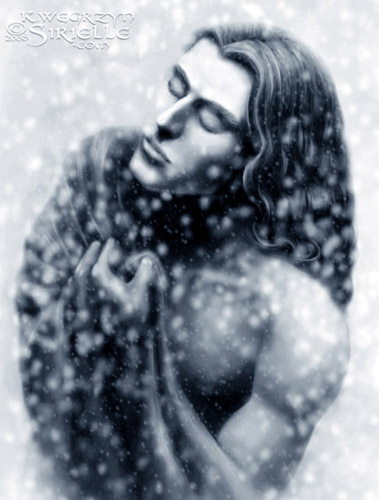
Winter morning in Himring, the siedge of Angband time. Short look at the world with bright grey eyes. Vignette, Maedhros' POV.
The Harper by JunoMagic
A short story about the harper singing at the Field of Cormallen. It ties in loosely with my story "Lothíriel" and even more loosely with the Silmarillion. Fourth Age, approximately 3028.
The Nightingale by Gadira
Melian the Fire Dragon? Thingol the Nightingale? Dior´s teenage wisdom cannot make sense of it at all.
The Land of Gift by Gadira
On the final fate of Tuor and Idril, and the roots of certain important events of the Second Age. Slightly uncanonical, or at least Untolkienesque. Nominated for the MPAs and the MEFAs.
Closing the Circle by Gadira
Of Fëanor´s death and the final fate of the Broideress. Warning for extremely archaic notions of thought. Part IV of the Broideress Arc.
Facing the Darkness by Gadira
They had always been two, the Broideress and the Healer. Rumours said that they had awoken side by side under the stars, but now the Broideress must face the darkness alone. Part I of the Broideress Arc.
The Accursed by Gadira
Who can tell what was in the betrayer´s mind as he performed his deed? Silmarillion-based, featuring a Very Shafted Character. (One of my old fics)
Full of Wisdom and Perfect in Beauty by Gadira
The History of the Downfall, from Ar Sakalthôr's accession to Ar Pharazôn's Armada. EPILOGUE: In Middle-earth, life begins anew, and hope lies hidden in the most unlikely places. Story now complete.
Luthien Tinuviel by Endaewen
Short stories about Beren and Luthien. Filling the Doom'n'Gloom prompt set from the arda100 Challenge.
Tales of Thanksgiving: A Drabble Collection by Dawn Felagund
Series of fixed-length ficlets written as holiday gifts for friends in 2006. Content varies for each drabble, so please heed the warnings posted at the top of each. Adult-rated ficlets are marked with an asterisk (*). MEFA 2007 winner: 3rd Place, First Age and Prior.
My Legacy by spookystoy
Celebrimbor doubts his father has any skill worthy of passing on.
A Natural Talent by spookystoy
At an early age, Curufin shows a natural aptitude for his father's arts.
The Rising of Eärendil's Star by MithLuin
Maglor's foster sons learn about the meaning of the new star from the last two Sons of Fëanor.
Paper by Dawn Felagund
Curufin escapes to the realms of fantasy to escape the pressures of his family and discovers the thrill of first love.
It Gives A Lovely Light (Drabble/Ficlet Collection) by oshun
Latest addition: "The Boy My Daughter Married," (featuring Curufin’s mother-in-law, Curufin/OFC, and a blink-and-you-will-miss-it reference to Celebrimbor).
Chapters are added within chronological order of the events.
A series of drabbles/ficlets: seeds of stories based upon characters and events from the Silmarillion. The title of the collection is taken from a line in a poem by Edna St. Vincent Millay, because it reminded me of the exiled Noldor, particularly, although not exclusively, the sons of Feanor:
My candle burns at both ends;
It will not last the night;
But ah, my foes, and oh, my friends--
It gives a lovely light!
No Matter the Cost by spookystoy
Curufin looks to his father as the swan ships leave Alqualondë.
Ascendancy by ford_of_bruinen
This story looks at Fingolfin's last stand and his motivation for challanging Morgoth to single combat.

